
Current real estate market data, news and analysis for the Dover, DE metropolitan area — 194,786 residents across Kent county.
Data as of May 2026. Sources: Redfin Data Center, U.S. Census Bureau.
Latest Dover Real Estate News
Coverage of this market is coming soon. Browse all housing market news.
Dover Real Estate Market Overview
Dover sits on Delaware’s low, flat coastal plain along the St. Jones River, a few miles inland from Delaware Bay, in terrain that ranks among the lowest-elevation in the country. As the state capital, Dover combines a small, historic government and commercial core with surrounding suburban growth and, beyond the city limits, the open farmland that still defines much of Kent County. The climate is humid subtropical, moderated somewhat by the bay, with mild winters and hot, humid summers. The city’s housing spans a genuine range of eras, a compact historic downtown, a substantial mid-century band of construction, and continued growth through later decades, rather than the product of a single development boom. Single-family detached homes dominate the housing stock, set within a mix of a walkable historic core, postwar and later suburban subdivisions, and rural land on the city’s edges.
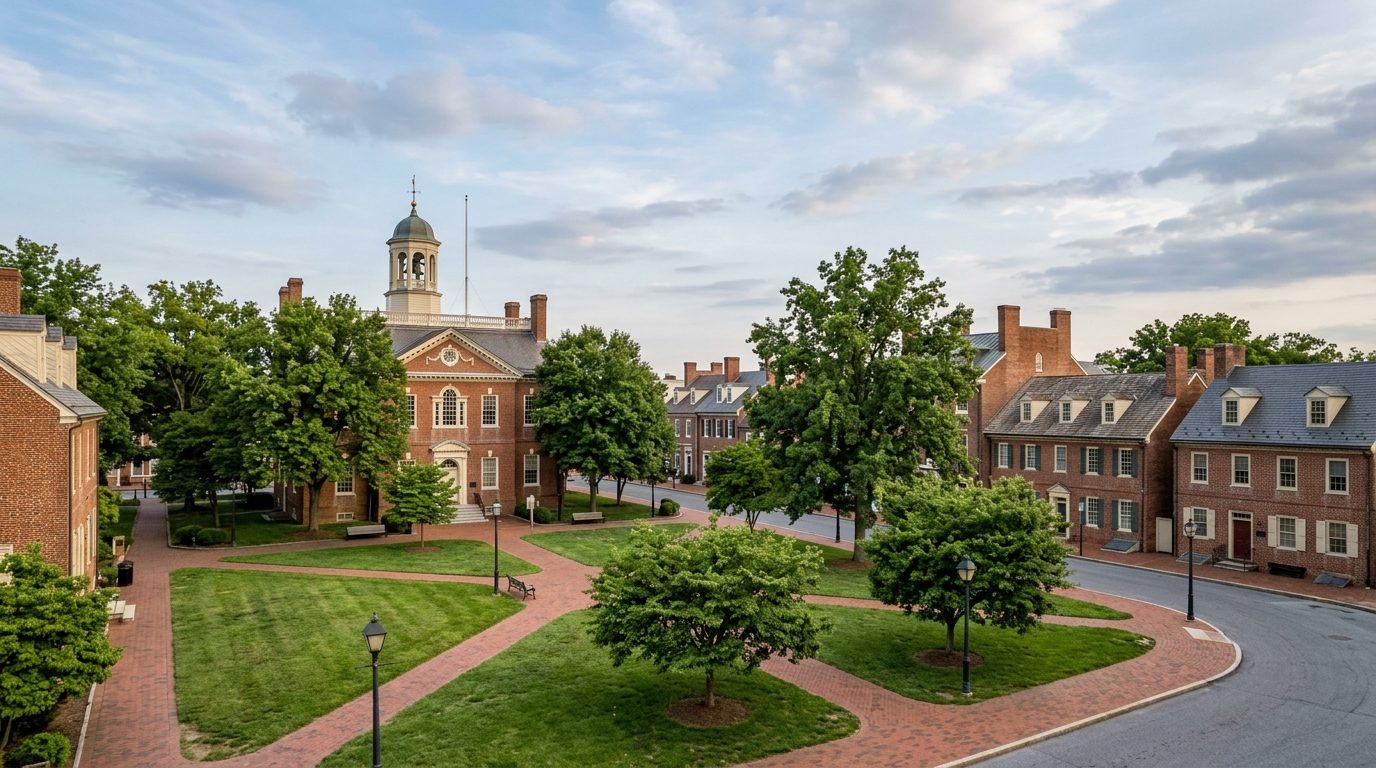
Downtown Dover, sometimes called Olde Dover, contains two federally recognized historic districts anchored by The Green and State Street, with architecture dating to the colonial and Victorian eras; housing here trades modern systems for genuine historic character. Areas near Dover Air Force Base, including Rodney Village, were largely built in the early 1960s for military families and tend toward smaller, older ranch and split-level homes. Newer subdivisions and active-adult communities have developed along the growth edges of the city and the Route 1 corridor, which state transportation planners have specifically designated for more controlled growth. Farther out, Kent County remains agricultural, with farmland use shifting only gradually even as development pressure has grown around Dover itself.
Dover Air Force Base, home to thousands of active-duty personnel and the Air Mobility Command’s primary East Coast cargo terminal, is by far the region’s largest single employer and shapes housing demand throughout the metro. State government is a major employer in its own right, since Dover is Delaware’s capital. Bayhealth’s Kent Campus hospital anchors regional healthcare, and Delaware State University adds a higher-education employer within the city. Named private employers in the area include Kraft Heinz, Perdue, and Procter & Gamble, reflecting a mix of food and consumer-goods manufacturing. Dover Motor Speedway, built in the late 1960s on former farmland, draws large NASCAR race-weekend crowds that support hospitality and retail business well beyond the track itself.
Flood risk in this metro runs in two distinct directions: inland, rainfall-driven flooding along the St. Jones River corridor through Dover itself, and separately, regular tidal and storm flooding along the Delaware Bay shoreline communities to the east, some of which have seen federal flood buyouts. Buyers should check FEMA flood-zone status for any specific address rather than assuming inland Dover and shoreline properties share the same risk profile. Delaware has no state sales tax, a factor often cited in the state’s overall cost-of-living picture, though it does levy property taxes locally, and the state now requires periodic reassessment after decades in which some counties went without updating assessed values. Public transit is limited to DART First State bus service, based at Dover’s transit center; most of the metro outside the immediate downtown core is car-dependent. Buyers near the edge of Dover should also confirm which school district, Caesar Rodney or Capital, a specific address falls under, since boundaries vary block by block in some areas.
Cities and Towns in the Dover Metro Area
Notable Communities and Neighborhoods
Dover Real Estate Market FAQ
How is the Dover, DE housing market organized across the metro?
The market centers on Dover itself, with a historic downtown core near The Green, mid-century neighborhoods near Dover Air Force Base, newer subdivisions along the Route 1 growth corridor, and agricultural land across the rest of Kent County.
Which parts of the Dover metro tend to carry higher prices?
Newer subdivisions and active-adult communities along the city’s growth edges and the Route 1 corridor generally reflect more recent construction than the older housing near Dover Air Force Base or in the historic downtown core.
What should buyers verify before purchasing in the Dover area?
Check FEMA flood-zone status for the specific address, since flood risk differs sharply between inland Dover and the Delaware Bay shoreline communities, and confirm whether a property falls in the Caesar Rodney or Capital school district.
Is flooding a significant risk for homeowners in the Dover metro?
It depends heavily on location — Delaware Bay shoreline communities face regular tidal and storm flooding, while inland Dover’s flood risk is more tied to heavy rainfall along the St. Jones River, so a parcel-specific flood-zone check is essential either way.
Nearby Markets