
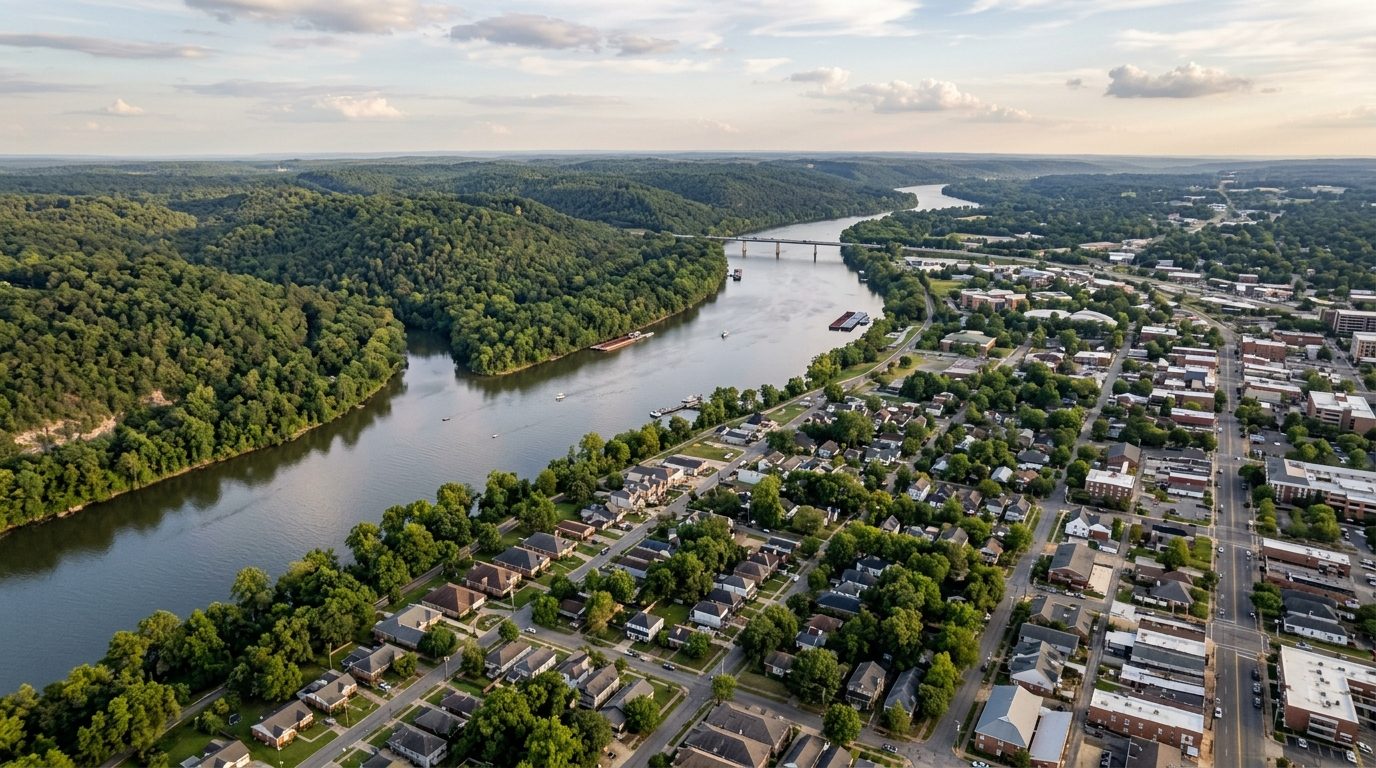
Current real estate market data, news and analysis for the Tuscaloosa, AL metropolitan area — 281,850 residents across Greene, Hale, Pickens and Tuscaloosa counties.
Data as of May 2026. Sources: Redfin Data Center, U.S. Census Bureau.
Latest Tuscaloosa Real Estate News
Coverage of this market is coming soon. Browse all housing market news.
Tuscaloosa Real Estate Market Overview
The Tuscaloosa metro sits at the Fall Line, the geological hinge where the hilly Cumberland Plateau country of north-central Alabama gives way to the flatter Gulf Coastal Plain, with the Black Belt region beginning in Greene and Hale counties to the south and west. The Black Warrior River splits the core of the metro, with the city of Tuscaloosa on the south bank and Northport on the north, and Lake Tuscaloosa, an impoundment north of the city, forming a recreational and residential focal point. Housing stock reflects that layered history: brick and frame homes from the early twentieth century in Tuscaloosa’s in-town historic districts, mid-century ranch houses in first-ring neighborhoods, dense apartment and rental construction near the University of Alabama campus, and newer subdivisions extending east toward Cottondale and Holt and north into Northport. Rural Greene, Hale, and Pickens counties retain more farmhouses and larger acreage parcels tied to the Black Belt’s agricultural base.
Within the metro, price tiers generally track proximity to the University of Alabama and to water. In-town Tuscaloosa neighborhoods and historic districts near campus command a premium for walkability and steady demand, though heavy student-rental turnover shapes character on some blocks. Lake Tuscaloosa’s shoreline, along with golf-course communities built around it, sits toward the higher end because of water access and larger lots. Northport, across the river, has traditionally offered relatively more affordable options while remaining a short commute, and its historic downtown draws buyers seeking small-town character. Newer growth east of Tuscaloosa toward Cottondale tends toward recently built homes at a discount to lake and in-town locations. The most affordable, least dense options are farther out in rural Greene, Hale, and Pickens counties.
The University of Alabama is the region’s dominant employer, drawing on both direct campus employment and the spending generated by tens of thousands of students and home football weekends, which ripples through housing, hospitality, and retail. West of the city in Vance, Mercedes-Benz U.S. International operates a large vehicle-manufacturing plant that anchors an automotive-supplier network across the county. DCH Health System, a nonprofit hospital system with facilities in Tuscaloosa and Northport, is a major healthcare employer. Nucor Steel operates a steel mill in Tuscaloosa that, alongside other manufacturers and the Port of Tuscaloosa, forms part of the area’s industrial base. Outside the urban core, agriculture and timber remain economic mainstays of the rural counties.
Several local factors distinguish this market. The region lies within Dixie Alley, a tornado-prone zone of the southeastern United States where severe storms can occur outside the spring peak and are more likely to strike at night, making a storm shelter a meaningful consideration for buyers. Land near the Black Warrior River and its tributary creeks carries flood risk, so checking floodplain maps before purchase is important. Alabama’s property tax burden is among the lowest of any state, though actual rates vary by whether a property sits inside city limits versus unincorporated county land, so local millage rates should be confirmed directly. Public transit is limited and the metro is largely car-dependent. Development regulation is tighter inside incorporated cities than in unincorporated county areas. Rental demand near campus follows the academic calendar and football season, affecting investment properties differently than owner-occupied housing elsewhere in the metro.
Cities and Towns in the Tuscaloosa Metro Area
Notable Communities and Neighborhoods
Tuscaloosa Real Estate Market FAQ
How is the Tuscaloosa-area housing market organized geographically?
The metro centers on the Black Warrior River, which separates Tuscaloosa on the south bank from Northport on the north, with Lake Tuscaloosa forming a recreational hub to the north of the city. The broader metro also includes Tuscaloosa County’s smaller towns such as Brookwood and Coker, plus rural Greene, Hale, and Pickens counties to the south and west, which sit in the Black Belt region beyond the Fall Line that runs near Tuscaloosa.
Which parts of the metro tend to be pricier, and why?
In-town neighborhoods and historic districts close to the University of Alabama campus, along with Lake Tuscaloosa’s shoreline and its surrounding golf-course communities, tend to sit at the higher end due to walkability, water access, and steady demand. Northport, newer subdivisions east of Tuscaloosa toward Cottondale, and rural areas in the outlying counties generally offer more affordable options, trading some commute distance or density for lower housing costs.
What should buyers verify before purchasing in this market?
Buyers should confirm whether a property lies inside city limits (Tuscaloosa, Northport, Brookwood, Coker) or in unincorporated county land, since this affects zoning, services, and the applicable tax millage rate. It’s also worth checking floodplain status for properties near the Black Warrior River or its creeks, any HOA covenants for planned communities, school district assignment, and whether the home includes a storm shelter or safe room.
What is the region’s tornado risk, and how should buyers think about it?
Alabama sits within Dixie Alley, a tornado-prone corridor of the southeastern U.S. distinct from the Great Plains tornado alley, where severe storms can occur outside the typical spring peak and nighttime tornadoes are more common than in other regions. Buyers should ask whether a property has a storm shelter or safe room, review the home’s construction and insurance coverage for wind events, and factor storm risk into any renovation or new-build decisions.
Nearby Markets