
Current real estate market data, news and analysis for the Mobile, AL metropolitan area — 411,658 residents across Mobile county.
Data as of May 2026. Sources: Redfin Data Center, U.S. Census Bureau.
Latest Mobile Real Estate News
Mobile Real Estate Market Overview
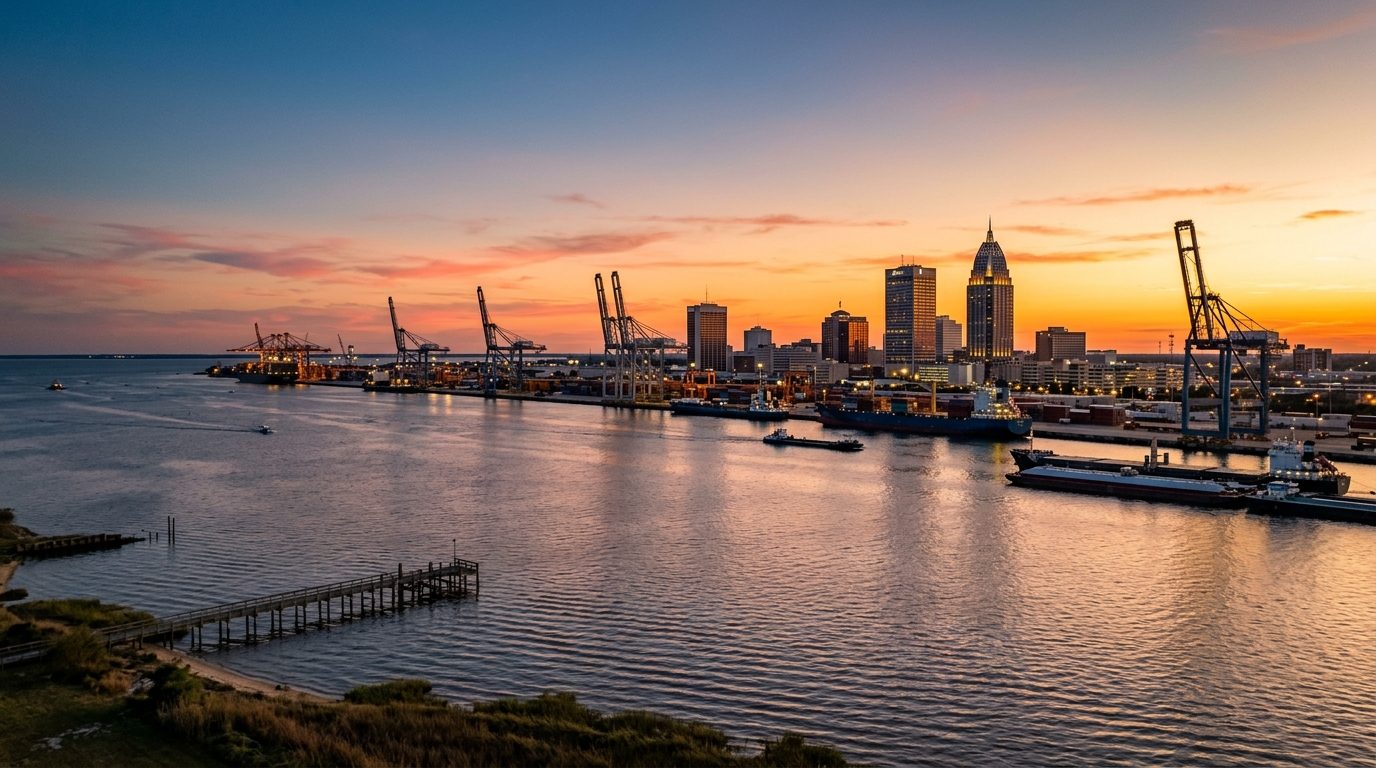
Mobile sits on the Mobile River where it empties into Mobile Bay, at the convergence of the Mobile-Tensaw Delta and the northern Gulf Coast. The metro is largely flat and low-lying, threaded by bayous, creeks, and marsh, with the bay forming its eastern edge and Dauphin Island guarding the mouth of the bay to the south. Housing stock reflects a long settlement history: downtown and Midtown Mobile contain dense blocks of historic homes within national register historic districts, while newer subdivisions of brick ranch and traditional-style houses spread west and north through unincorporated Mobile County and into towns such as Saraland, Semmes, and Satsuma. Coastal and bay-adjacent areas, including Dauphin Island, feature elevated cottages and piling-supported construction built for water exposure.
Within the metro, older neighborhoods close to downtown vary widely, with restored historic homes commanding a premium alongside blocks that have seen long-term disinvestment. Spring Hill and Midtown, along with the Oakleigh Garden and De Tonti Square historic districts, tend to sit toward the higher end of the market because of mature tree canopy, architectural character, and proximity to Spring Hill College, museums, and downtown employment. West Mobile, covering newer growth corridors, generally offers more recently built homes on larger lots at a range of price points. Waterfront and near-waterfront property along the bay and on Dauphin Island carries its own premium tied to views and access, offset by greater exposure to storm and flood risk. Areas farther from the urban core, including parts of Prichard, Chickasaw, and Toulminville, along with some unincorporated pockets, tend to have older, smaller housing stock and lower price points, often tied to aging infrastructure and a more limited local tax base.
The metro’s economy centers on maritime industry, aerospace manufacturing, and healthcare. The Alabama State Port Authority operates the Port of Mobile, the state’s only deepwater seaport, anchoring a broader logistics, shipping, and industrial base along the Mobile River and the Theodore Ship Channel. Austal USA operates a large aluminum and steel shipbuilding yard on Blakeley Island building vessels for the Navy and Coast Guard, and ranks among the region’s largest industrial employers. Airbus operates a commercial aircraft final assembly complex near Mobile Regional Airport that has expanded repeatedly since it opened. Healthcare is another major employment sector, led by USA Health and Infirmary Health along with the University of South Alabama, itself a significant employer and the region’s principal public research university.
The Gulf Coast location means hurricane season is a routine part of homeownership, and flood risk extends beyond the officially mapped high-risk zones along the bay and its tributaries into low-lying inland areas after heavy rain. Insurance costs, especially windstorm and flood coverage, vary by elevation, construction type, and distance from the coast, so buyers should confirm flood zone designation and windstorm mitigation status before purchase. Alabama’s property tax rates are comparatively low, though rates and school funding differ between the city of Mobile, incorporated suburbs, and unincorporated county areas. Public transit is limited and the region is largely car-dependent. Much of the metro’s growth has occurred through outward development into unincorporated Mobile County and smaller municipalities rather than dense infill, so buyers should also check municipal versus county jurisdiction, annexation status, and drainage history before committing to a property.
Cities and Towns in the Mobile Metro Area
Notable Communities and Neighborhoods
Mobile Real Estate Market FAQ
How is the Mobile, AL metro area organized for housing?
The metro is anchored by the city of Mobile, which contains a historic urban core of older, walkable neighborhoods near downtown and the bay. Surrounding it, unincorporated Mobile County and a ring of smaller municipalities such as Saraland, Semmes, Satsuma, and Creola hold most of the newer subdivision growth, while coastal communities like Dauphin Island and Bayou La Batre are more distinct, water-oriented pockets outside the main urban footprint.
Which areas of Mobile tend to be pricier, and why?
Neighborhoods with mature tree canopy, historic architecture, and proximity to downtown institutions, such as Spring Hill, Midtown, and the Oakleigh Garden and De Tonti Square districts, tend to command higher prices for their character and location. Waterfront and near-waterfront property along Mobile Bay and on Dauphin Island also carries a premium tied to views and water access, though that premium is paired with greater storm and flood exposure. Newer subdivisions farther from the urban core generally price on lot size, home age, and school zoning rather than historic character.
What should buyers verify locally before purchasing in the Mobile metro?
Because incorporated cities, towns, and unincorporated Mobile County areas can differ in services, school zoning, and permitting, buyers should confirm which jurisdiction a property sits in, whether it has been annexed into a municipality, and how that affects taxes and utilities. It is also worth checking a property’s flood zone designation, elevation, and drainage history, along with road access, since public transit is limited and most of the metro is car-dependent.
How significant is hurricane and flood risk in the Mobile area, and how does it affect insurance?
The Mobile metro sits directly on the Gulf Coast and Mobile Bay, so hurricane season and heavy seasonal rainfall are ongoing considerations for homeowners, with flood risk extending beyond the officially mapped high-risk zones into low-lying inland areas. Windstorm and flood insurance costs vary considerably based on a property’s elevation, construction type, and distance from the coast, so buyers should obtain flood zone and elevation information and windstorm mitigation details before closing rather than assuming standard homeowners coverage is sufficient.
Nearby Markets