
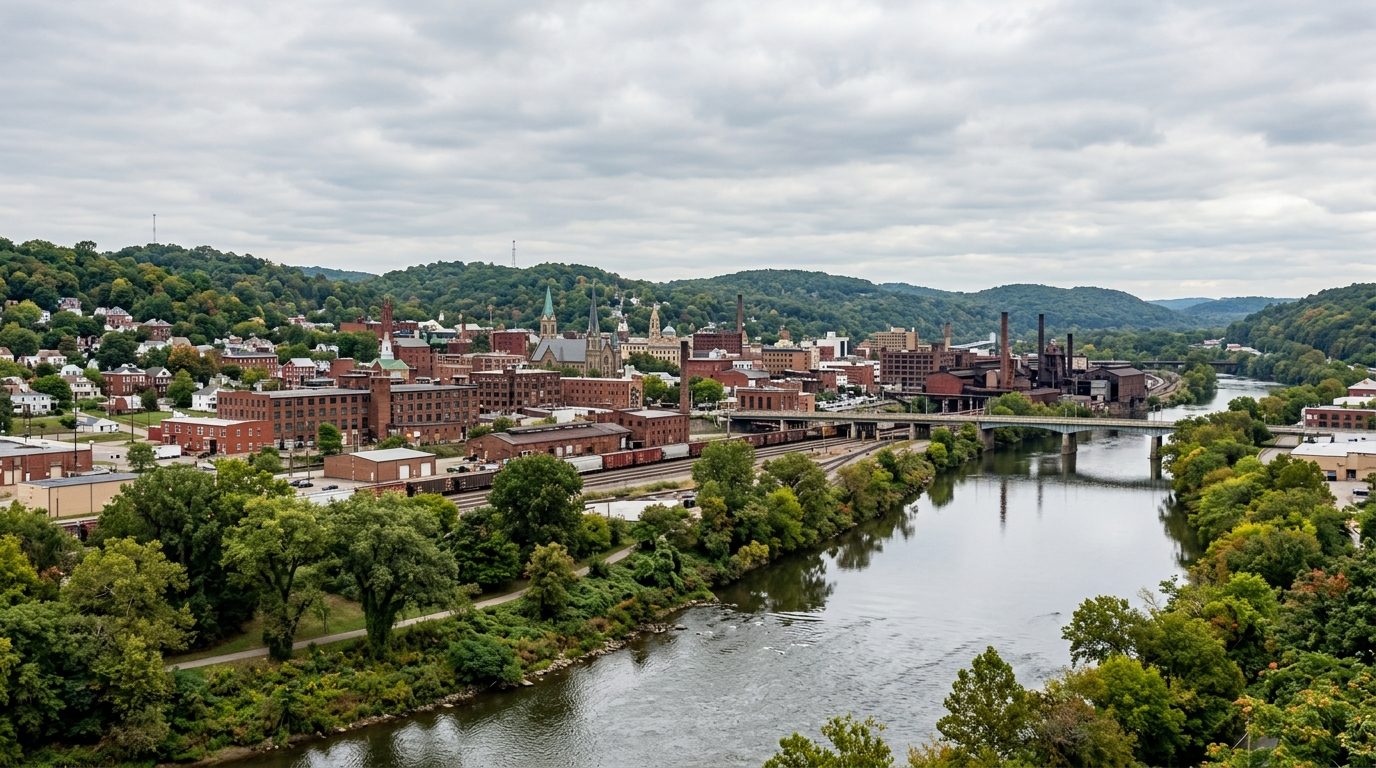
Current real estate market data, news and analysis for the Youngstown-Warren, OH metropolitan area — 423,678 residents across Mahoning and Trumbull counties.
Data as of May 2026. Sources: Redfin Data Center, U.S. Census Bureau.
Latest Youngstown Real Estate News
Youngstown Real Estate Market Overview
The Youngstown-Warren metro occupies Ohio’s Mahoning Valley, spanning Mahoning and Trumbull counties along the Mahoning River near the Pennsylvania line. Youngstown anchors the southern half of the valley and Warren the northern half, with river-corridor cities and villages, including Niles, Girard, Struthers, Campbell, McDonald, Hubbard, Lowellville, Sebring, and Newton Falls, filling the space between, while outlying townships and villages such as Canfield, Poland, Cortland, Beloit, New Middletown, Orangeville, West Farmington, Craig Beach, and Yankee Lake extend toward farmland and small lakes. This is a legacy Rust Belt industrial region, and its housing stock reflects that history: dense grids of foursquares, bungalows, and worker cottages from the steel and manufacturing era dominate the urban core, while newer ranch and split-level homes sit mostly in outer townships and near the lakes.
Price tiers track distance from the industrial core and the age of the housing stock more than any single dividing line. Outer suburban townships such as Canfield and Poland, plus parts of neighboring Boardman township, carry higher prices, supported by newer construction, larger lots, and well-regarded schools. Lakeside communities near Mosquito Creek Lake and Lake Milton also command a premium. Urban neighborhoods in Youngstown, Warren, Niles, Campbell, and Struthers generally sit toward the lower end, reflecting an older building stock, population loss, and pockets of vacant or blighted property left behind by deindustrialization. Even within the core cities, historic districts such as Youngstown’s Wick Park and Warren’s Historic Perkins hold architecturally distinctive homes trading at a premium to their surroundings, though still modest next to the outer suburbs.
The valley’s economy was built on steel and later auto manufacturing, with much of its identity tied to mills along the Mahoning River and the General Motors assembly complex in Lordstown. Plant closures reshaped the economy over time, which has since diversified into healthcare, education, and advanced manufacturing and logistics. Mercy Health’s St. Elizabeth campus is the major hospital system anchoring Youngstown, and Youngstown State University is a significant downtown employer. The former GM site in Lordstown has been repurposed around electric-vehicle battery production through Ultium Cells, a joint venture tied to General Motors and LG Energy Solution, part of a local push toward battery and EV supply-chain manufacturing. Steel production continues at a smaller scale through Vallourec’s Youngstown pipe mill, and Youngstown Air Reserve Station remains a substantial employer, alongside warehousing and distribution operations along the highways.
The Mahoning Valley has a full four-season climate with cold, snowy winters; areas north of Warren sit within reach of lake-effect snow bands off Lake Erie, so winter weather can vary within a short drive. Ohio’s municipal income tax system means many cities and villages levy their own local income tax, administered through the Regional Income Tax Agency, on top of county property taxes and school levies, and rules differ by jurisdiction, so buyers should confirm the tax situation for any specific address. Public transit is limited to local bus service through the Western Reserve Transit Authority, and the region is largely car-dependent. Zoning and permitting are handled separately by each city, village, and township. Because so much housing predates modern building codes, buyers should verify roofing, wiring, plumbing, and foundation condition, check lead-paint disclosures, confirm flood-zone status near the river and reservoirs, and check whether a property sits within a land bank program.
Cities and Towns in the Youngstown Metro Area
Notable Communities and Neighborhoods
Youngstown Real Estate Market FAQ
How is the Youngstown-Warren housing market organized across the metro?
The metro is built around two urban cores, Youngstown and Warren, connected along the Mahoning River by smaller cities and villages such as Niles, Girard, Struthers, and Campbell. Surrounding those cores are townships and outlying villages that spread toward farmland and small lakes across Mahoning and Trumbull counties. Housing choices generally fall along a spectrum from dense, older urban neighborhoods near the historic industrial corridor to newer, more spread-out suburban and rural areas at the edges.
Which parts of the Youngstown-Warren area tend to be pricier, and why?
Outer suburban townships such as Canfield and Poland, along with parts of Boardman township, tend to be pricier because of newer housing construction, larger lots, and schools that draw buyers from across the valley. Areas near lakes and reservoirs also carry a premium for their setting. Urban neighborhoods closer to the historic industrial core in Youngstown, Warren, Niles, and nearby cities tend to be more affordable, reflecting older housing stock and the lingering effects of population loss and deindustrialization.
What should buyers verify locally before purchasing in this metro?
Buyers should confirm which city, village, or township a property sits in, since Ohio’s local income taxes, property tax levies, and zoning and permitting rules are all set at that level and vary by jurisdiction. It is also worth checking a property’s flood-zone status near the Mahoning River or area reservoirs, confirming school district boundaries, and asking whether a property is located within a county land bank or vacant-property program tied to the region’s redevelopment efforts.
What is a key regional risk buyers should understand about the local housing stock?
Much of the metro’s housing predates modern building codes, particularly in the urban cores of Youngstown, Warren, and Niles, so older roofing, wiring, plumbing, and foundations are common and should be inspected closely. Lead-based paint is also a common disclosure item in older homes. Buyers should budget for the possibility of system upgrades and should have any older home thoroughly inspected before purchase.
Nearby Markets