
Current real estate market data, news and analysis for the McAllen-Edinburg-Mission, TX metropolitan area — 921,549 residents across Hidalgo county.
Data as of May 2026. Sources: Redfin Data Center, U.S. Census Bureau.
Latest McAllen Real Estate News
Coverage of this market is coming soon. Browse all housing market news.
McAllen Real Estate Market Overview
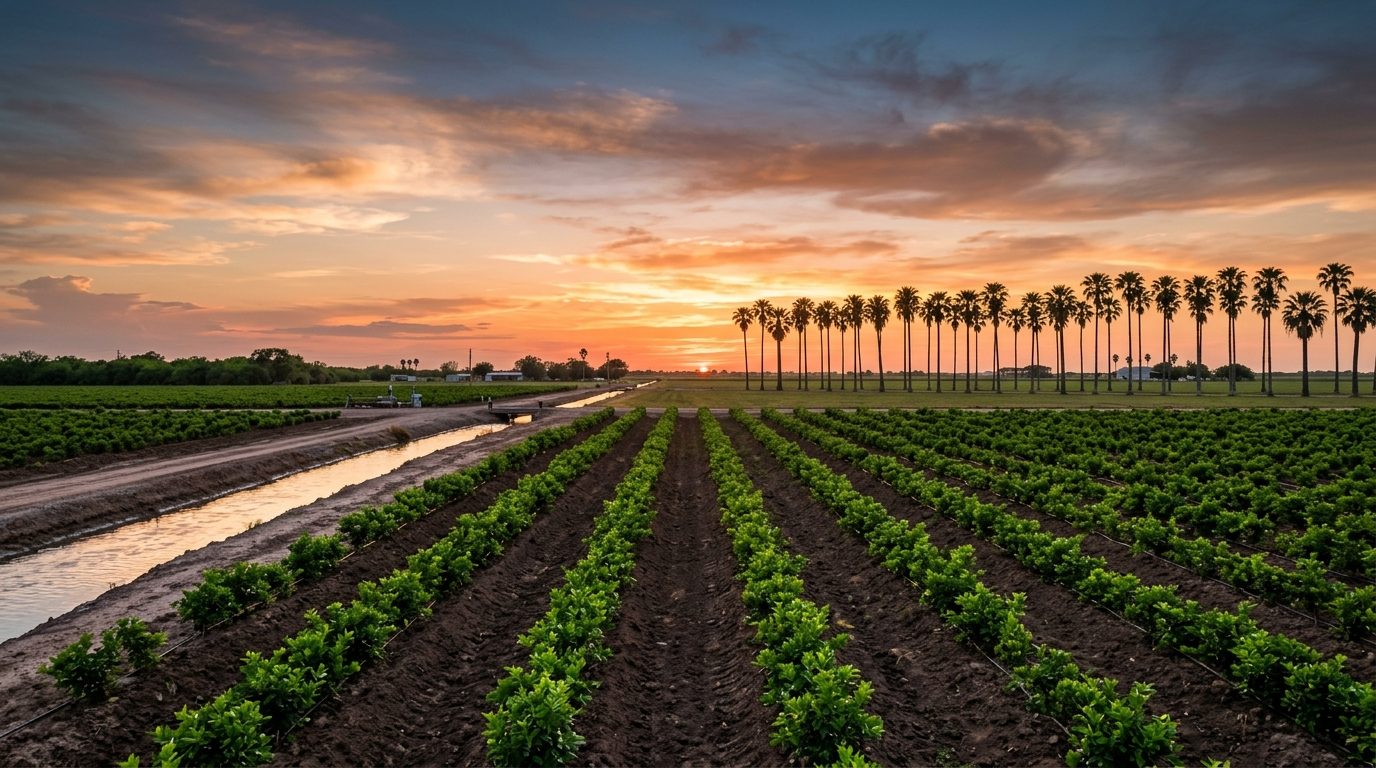
The McAllen metro occupies flat, brushland terrain at the southern tip of Texas, along the Rio Grande directly across from the Mexican city of Reynosa — a binational urban region shaped as much by cross-border trade as by geography. The land is coastal-plain flat with limited natural drainage, and the climate runs hot and humid most of the year. Housing stock skews new: large master-planned communities have gone up over the past two to three decades on former farmland, most notably Sharyland Plantation spanning the Mission-McAllen line and Tres Lagos in north McAllen, both built around lakes, trails, and modern amenities. Older, denser neighborhoods near downtown McAllen retain a more traditional grid layout, while some unincorporated areas at the metro’s fringe still carry the legacy of colonias — subdivisions that grew up outside city limits without full water, sewer, or paved-road infrastructure.
North McAllen is the metro’s more affluent tier, home to newer subdivisions, established country-club neighborhoods, and the area’s top-rated schools, with Tres Lagos and Sharyland Plantation anchoring the newest and highest-amenity construction. Downtown and central McAllen, an older grid of neighborhoods including College Heights and the Gardens, form the historic core — culturally significant, with a walkable arts district, but built on an older housing stock than the newer suburbs to the north. Smaller towns further from McAllen proper, including La Joya, Peñitas, and Sullivan City, along with unincorporated colonia areas throughout the county, sit at the more affordable end, shaped by decades of agricultural land use and, in some pockets, infrastructure that has taken longer to catch up than in the newer planned communities.
Cross-border trade defines the local economy. Three international bridges serve the area, with the Pharr crossing ranking among the busiest commercial ports of entry on the entire border, and Reynosa’s manufacturing sector — much of it automotive-parts and electronics supply chains — is deeply intertwined with jobs on the U.S. side in logistics and trade support. Healthcare is the other major pillar: McAllen functions as a regional medical hub, anchored by several large hospital systems that draw patients from across the Rio Grande Valley and into Mexico. Higher education includes the University of Texas Rio Grande Valley, notable for housing both medical and podiatric medical schools, along with South Texas College’s multiple area campuses.
Flat terrain limits natural drainage across the metro, and heavy rain or tropical weather can produce street and low-lying-area flooding well away from the river itself, so flood insurance is worth carrying regardless of official flood-zone status. Some unincorporated colonia areas still lag on infrastructure like paved roads and stormwater drainage, a detail worth checking directly with the county for any property outside city limits. Texas levies no state income tax but leans more heavily on property taxes to fund local services, a trade-off buyers relocating from income-tax states should factor into their budgeting. The metro has been among the fastest-growing in the country, with continued outward suburban expansion, and proximity to the border remains a defining, largely positive economic feature tied to trade rather than a risk factor in itself.
Cities and Towns in the McAllen Metro Area
Notable Communities and Neighborhoods
McAllen Real Estate Market FAQ
How is the McAllen-Edinburg-Mission housing market organized?
It runs from newer master-planned communities like Sharyland Plantation and Tres Lagos in north McAllen, through the older downtown grid, out to smaller agricultural towns and some unincorporated colonia areas at the metro’s fringe.
Which areas tend to be pricier and which more affordable?
North McAllen’s newer subdivisions and country-club neighborhoods sit at the higher end, while smaller towns like La Joya, Peñitas, and Sullivan City, along with some unincorporated colonia areas, are generally more affordable.
What should buyers verify before purchasing here?
Carry flood insurance regardless of official flood-zone status given the area’s flat, slow-draining terrain, and for property in unincorporated areas, confirm with the county that water, sewer, and road infrastructure are fully in place.
What regional risk factor is most important to understand?
Some older unincorporated colonia subdivisions still lag on basic infrastructure like paved roads and drainage — worth checking directly with Hidalgo County for any property outside McAllen, Edinburg, or Mission city limits.
Nearby Markets