
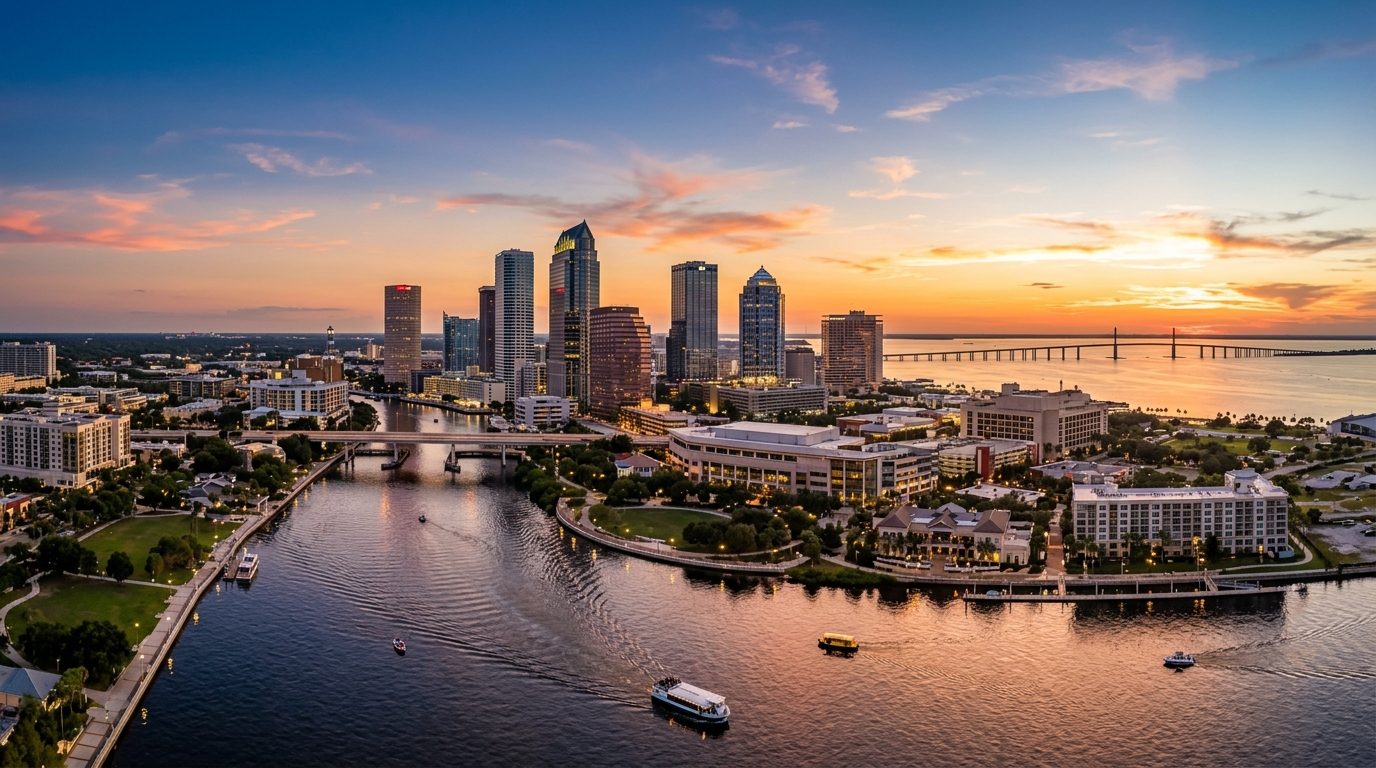
Current real estate market data, news and analysis for the Tampa-St. Petersburg-Clearwater, FL metropolitan area — 3.4M residents across Hernando, Hillsborough, Pasco and Pinellas counties.
Data as of May 2026. Sources: Redfin Data Center, U.S. Census Bureau.
Latest Tampa Real Estate News
Tampa Real Estate Market Overview
Tampa-St. Petersburg-Clearwater covers Hillsborough, Pinellas, Pasco and Hernando counties around Tampa Bay and the Gulf Coast. The bay separates Tampa from St. Petersburg and Clearwater, while bridges and causeways connect major employment and residential districts. Tampa contains historic bungalows, block homes, townhouses, apartments, condominiums and newer urban development. St. Petersburg combines older grid neighborhoods, waterfront condominiums, mid-century houses and expanding downtown residential districts. Pinellas County is more densely developed and includes beach communities with condominiums, cottages and waterfront homes. Pasco and Hernando counties shift toward newer subdivisions, master-planned communities, retirement housing and lower-density properties on the northern edge of the metro.
Higher price tiers are generally associated with Davis Islands, Harbour Island, Hyde Park, Palma Ceia, waterfront South Tampa, Belleair, Clearwater Beach, selected Pinellas beach communities and established waterfront sections of St. Petersburg. These areas tend to combine scarce land, water access, walkability, historic housing or proximity to major employment and entertainment districts. More attainable options are often found in inland Pinellas neighborhoods, eastern Hillsborough County, parts of Plant City, New Port Richey, Zephyrhills, Brooksville and outer Pasco and Hernando County communities. Lower acquisition costs farther from the core may be offset by longer commutes, tolls, homeowners association obligations, community-development district assessments or limited transit access.
The regional economy is supported by health care, financial services, defense, logistics, tourism, education, technology and professional services. MacDill Air Force Base anchors military and contractor employment in Tampa. Tampa General Hospital, BayCare, Johns Hopkins All Children’s Hospital and other health systems support major medical employment. The University of South Florida contributes education and research activity, while Port Tampa Bay, Tampa International Airport and regional distribution corridors support trade and transportation. Downtown Tampa, the Westshore business district, the University area, downtown St. Petersburg and employment centers in Clearwater and northern Hillsborough County form separate office and service clusters.
Hurricanes, wind, storm surge, inland flooding and high groundwater are central property considerations. Flood zones and evacuation zones measure different conditions, so both should be reviewed along with elevation and claims history. Insurance availability can depend on roof age, opening protection, building condition and distance from the coast. Florida condominium requirements make reserve funding, structural inspections and association records particularly important in older buildings. Much of the metro remains automobile-dependent, although local bus systems and limited regional transit serve selected corridors. Buyers should also verify community-development district obligations, homeowners association rules, septic or sewer service, sinkhole history where relevant and planned road or school improvements in fast-growing suburban areas.
Cities and Towns in the Tampa Metro Area
Notable Communities and Neighborhoods
Tampa Real Estate Market FAQ
How is the Tampa Bay housing market geographically organized?
The metro is divided by Tampa Bay and includes Tampa, St. Petersburg, Clearwater, the Pinellas beaches, eastern Hillsborough County and suburban growth corridors in Pasco and Hernando counties. Bridges, causeways, employment centers and flood exposure create distinct submarkets even when communities are geographically close.
Which Tampa Bay areas generally sit in higher price tiers?
Davis Islands, Harbour Island, Hyde Park, Palma Ceia, waterfront South Tampa, Belleair, Clearwater Beach, selected Pinellas beach communities and parts of downtown St. Petersburg generally occupy higher tiers. Water access, limited land, walkability, historic character and proximity to employment or entertainment districts contribute to those differences.
What should buyers verify before purchasing a Tampa Bay waterfront property?
Buyers should review the flood zone, elevation, evacuation zone, seawall condition, dock permits, prior claims and wind and flood insurance options. They should also investigate drainage, saltwater exposure and whether the property’s improvements comply with current coastal and local permitting rules.
What should buyers review in a Tampa Bay condominium?
Buyers should examine the association budget, reserves, structural and milestone inspection records when applicable, insurance, pending assessments, leasing restrictions and maintenance history. Coastal buildings may require additional review of balconies, roofs, concrete, windows, elevators and seawalls.
Nearby Markets