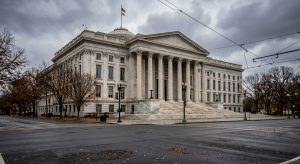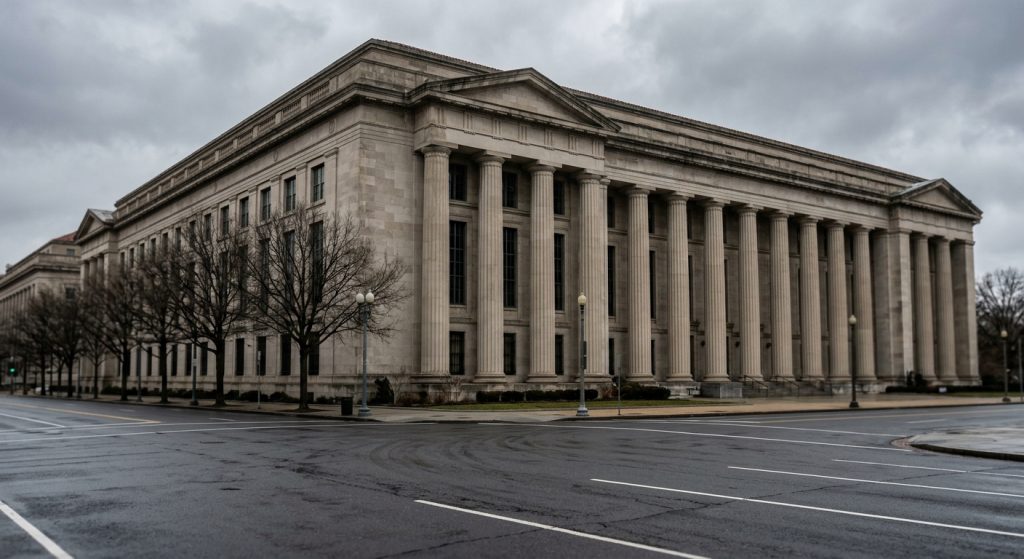
The Department of Housing and Urban Development has opened a Fair Housing Act investigation into Wells Fargo’s mortgage lending, putting nearly a decade of the bank’s public commitments to expand Black homeownership under federal scrutiny. In a letter dated Oct. 7, HUD’s top fair housing official notified Chairman and Chief Executive Charles W. Scharf that the department will determine whether the bank “has violated or intends to violate” the statute’s prohibition on discrimination in residential real estate-related transactions.
The letter, signed by Assistant Secretary for Fair Housing and Equal Opportunity Craig W. Trainor and posted by HUD alongside a redacted copy of the notice itself, is captioned a “Secretary-Initiated Investigation of Wells Fargo.” That matters procedurally: rather than responding to a consumer complaint, HUD is proceeding under its own authority at 42 U.S.C. § 3610(a)(1)(A)(iii), which lets the secretary launch an inquiry without an aggrieved party coming forward. Trainor wrote that he has directed the department’s Office of Special Investigations to examine whether the bank breached 42 U.S.C. § 3605, the section barring discrimination in the availability or terms of real estate-related transactions because of race or national origin.
What HUD is demanding from Wells Fargo
The letter sets a near-term clock. Within 10 business days of its date, HUD’s fair housing office will issue initial requests for information to the bank. If the office finds reasonable cause to believe Wells Fargo has violated or intends to violate customers’ civil rights, Trainor wrote, it will file charges of discrimination or refer the matter to the Justice Department.
It also functions as a litigation-hold notice. Trainor called it “a formal demand to preserve all existing and future records and materials related to your mortgage lending policies, practices, and programs,” instructing the company to prevent destruction or alteration of documents, communications, electronic information and metadata. The demand reaches “all electronic messages sent using official and personal accounts or devices, including records created using text messages, phone-based message applications, or encryption software.”
The programs under examination
Two sets of commitments anchor the inquiry, and both are documented in Wells Fargo’s own announcements. On Feb. 28, 2017, the bank pledged $60 billion in home-purchase lending to qualified African American borrowers, with a goal of creating at least 250,000 Black homeowners by 2027, plus $15 million over ten years for financial education and counseling.
On April 13, 2022, the bank expanded the effort to $210 million, including a $150 million special purpose credit program to lower rates and refinancing costs for eligible Black homeowners whose loans it serviced, and $60 million in grants through its Wealth Opportunities Restored through Homeownership program. HUD’s letter quotes that release repeatedly, including the bank’s own claim that its lending to Black families over 2011 through 2020 exceeded that of “the next three largest bank lenders combined.” Trainor wrote that by 2022 the company “fully embraced sorting homeowners—and offering different products or terms on those products—based on race,” and noted that the bank’s 2023 annual report said it had exceeded the $150 million commitment.
The letter also addresses the possibility that the programs are treated as historical, stating that although Wells Fargo “scrubbed its website of DEI references in 2025,” its obligations “rise or fall based on actual practices, not buzzwords or website aesthetics,” and that archived statements raise the question of whether the bank still prices loans by applicant race.
A reversal of federal policy on credit programs
HUD paired the letter with statements from three senior officials. “Even if Wells Fargo did not violate the law, its practice of dividing Americans based on race is immoral, unethical and un-American,” Secretary Scott Turner said. Deputy Secretary Andrew Hughes called the investigation “another important step in the agency’s work to restore justice to fair housing enforcement.” Trainor framed the legal theory directly: “The Fair Housing Act forbids racial discrimination in housing. It does not say: discriminate, so long as the discrimination is called a ‘special purpose credit program’ and justified as advancing ‘racial equity in homeownership.’”
The move follows six weeks after HUD and six other federal agencies rescinded the 2022 interagency statement that had encouraged lenders to offer special purpose credit programs. One nuance from that August notice still stands and bears on what HUD can prove: the programs remain lawful under the Equal Credit Opportunity Act, provided they comply with ECOA, Regulation B and the Fair Housing Act. The dispute is over whether a race-targeted refinance program satisfies the last of those three. The department has separately reoriented its fair housing enforcement spending, a shift that drew a federal lawsuit from fair housing organizations in July.
Wells Fargo had no immediate comment on the investigation, according to The Wall Street Journal, which first reported the letter and which HUD reprinted in full on its own news page. The Journal reported that the bank had reached roughly 40% of its $60 billion target and helped about 5,100 customers refinance, at average monthly savings of about $100, when it commissioned a racial-equity assessment in late 2023.
The homeownership gap the programs were built around remains wide. Census Bureau Housing Vacancies and Homeownership data for the second quarter of 2026 put the rate for non-Hispanic white alone householders at 74.5%, compared with 45.4% for Black alone householders and 58.6% for Asian, Native Hawaiian and Pacific Islander alone householders. On our reading, the outcome of this inquiry will set the practical boundary for how far any lender can go in targeting mortgage products at a specific group — a question the August rescission raised but did not answer.