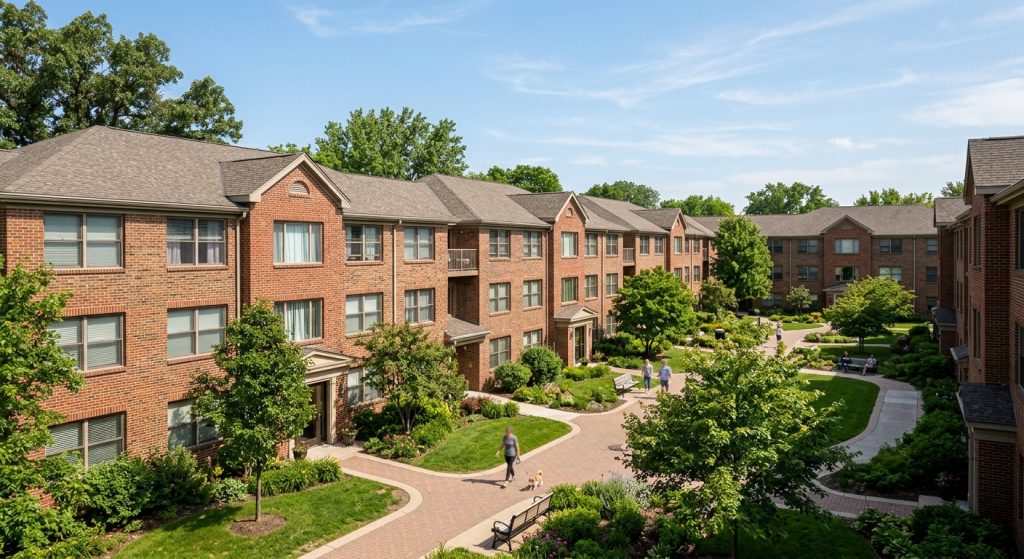
National Equity Fund, a nonprofit affordable housing investment manager, has acquired 32 properties from St. Louis Equity Fund, Inc. in a transaction with an equity value of more than $200 million, the company announced. The deal brings nearly 2,000 affordable homes across 13 tax-credit funds under NEF’s management, marking one of the larger affordable housing portfolio transfers to hit the St. Louis market this year.
The acquisition matters beyond its size: it preserves existing affordable housing stock rather than adding new supply, at a time when housing advocates say preservation is often faster and less costly than new construction for keeping low-income residents stably housed.
NEF, founded in 1987 and based in Chicago, is one of the largest syndicators of Low-Income Housing Tax Credits (LIHTC), the federal program that finances the majority of new and rehabilitated affordable housing in the United States. According to the company, it has invested nearly $30 billion since its founding, supporting roughly 274,000 new or preserved affordable homes nationwide.
St. Louis Equity Fund, Inc. (SLEFI), the seller, was founded in 1988 to syndicate LIHTCs regionally. Over nearly four decades, SLEFI said it raised more than $500 million through 155 partnerships, helping create more than 5,000 homes across Missouri and Illinois.
Deal details
Under the agreement, NEF acquired SLEFI’s properties and fund management portfolio: 32 properties spread across 13 funds, representing nearly 2,000 affordable homes throughout the St. Louis metropolitan region, according to NEF. The company said the equity value of the portfolio exceeds $200 million. Neither organization disclosed a purchase price or detailed financing structure for the transaction.
The properties serve a range of residents, including low-income individuals, families, seniors and people with disabilities, according to NEF.
NEF President and CEO Matt Reilein said St. Louis is a market where the company “has not traditionally had a large market share,” adding that expanding its geographic footprint “helps strengthen partnerships,” per public comments.
In NEF’s own announcement, Reilein said the company “collaborated with a fellow nonprofit to support investors and developers in the St. Louis region while preserving affordability for vulnerable residents,” and that the acquisition “provides an opportunity to deliver unparalleled expertise to new partners through fresh perspectives and our full suite of capital solutions.”
SLEFI President and CEO Jill Nowak said the organization’s board reviewed its mission before agreeing to the transition, concluding that “our highest priority is to support quality housing of vulnerable St. Louisans,” according to NEF.
The St. Louis transaction follows a busy year of consolidation for NEF. In May, the company acquired National Affordable Housing Trust’s portfolio of more than 165 properties across 29 funds, representing roughly 15,000 affordable homes nationwide. NEF also said it closed $1.95 billion in LIHTC equity earlier in 2026, surpassing its 2024 record.
What it means
The verified facts: NEF now oversees 32 additional properties and nearly 2,000 additional affordable units in the St. Louis region, with the transferred portfolio carrying an equity value above $200 million.
NEF and SLEFI, both parties to the deal, describe it as preserving affordability for vulnerable residents and stabilizing long-term ownership of the portfolio. Those characterizations reflect the companies’ own framing of the transaction’s impact, not independently verified outcomes.
RealtyWire’s analysis: the deal fits a broader consolidation pattern among LIHTC syndicators, in which smaller, regional nonprofits like SLEFI hand off aging portfolios to larger national players such as NEF, which can offer greater scale, capital access and asset-management infrastructure as tax-credit compliance periods on older properties mature. Because the transaction transfers existing properties rather than financing new construction, it does not add net units to the St. Louis housing supply — its effect is on preserving, rather than expanding, the region’s affordable stock.
What to watch
Whether NEF discloses further detail on financing terms or individual properties in the portfolio, how the ownership transition affects property management and resident services in the near term, and whether NEF continues its 2026 acquisition pace following the National Affordable Housing Trust and SLEFI deals are all worth tracking. For more multifamily and affordable housing deal coverage, visit RealtyWire.
Related coverage: EQT Real Estate Secures $268 Million Financing for 2.8 Million-Square-Foot Industrial Logistics Portfolio · Equity Union Expands Into Nevada, Its First Market Outside California · Santa Cruz County Named Nation’s Most Expensive Rental Market for Fourth Straight Year