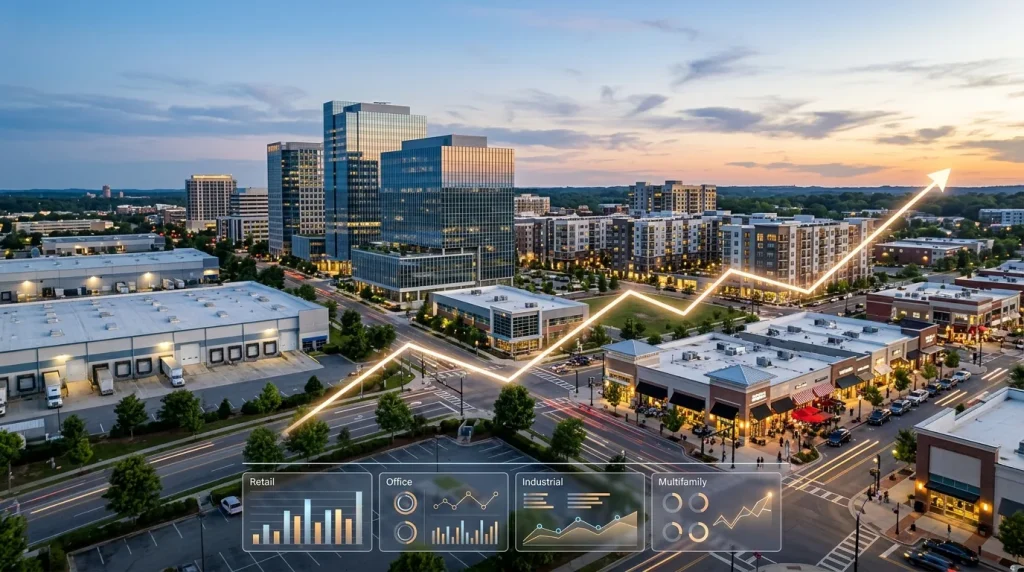
Commercial real estate in 2026 is no longer one simple distress story.
Office still faces high vacancy, but demand is improving for better space. Industrial leasing is rebounding after a period of normalization. Retail remains tight because new supply is limited. Multifamily is absorbing new units as construction slows. At the same time, debt maturities and refinancing costs remain major risks across the sector.
The most useful commercial real estate outlook for 2026 is not “CRE is back” or “CRE is broken.” It is that each sector is moving on its own timeline.
Key takeaways
- Office demand is improving, but vacancy remains high.
- CBRE reported 6.9 million square feet of office net absorption in Q1 2026.
- U.S. office vacancy fell to 18.6%, while prime vacancy tightened to 12.7%.
- Industrial leasing rose 14% year over year to 249.8 million square feet.
- Retail asking rents rose 2.4% year over year to $24.59 per square foot.
- Multifamily vacancy fell to 4.8% in Q1 as demand outpaced completions.
- MBA data shows commercial and multifamily mortgage debt remains a major 2026 issue, with $875 billion in commercial mortgage maturities scheduled for the year.
The 2026 CRE scoreboard
Commercial real estate fundamentals are moving in different directions by sector.
| Sector | 2026 signal | What it means |
|---|---|---|
| Office | Positive absorption, high vacancy | Stabilizing, but quality matters |
| Industrial | Leasing rebound, higher vacancy than peak years | Demand is back, but supply has normalized |
| Retail | Low availability, rising rents | Limited supply supports landlords |
| Multifamily | Vacancy falling, completions slowing | Demand is healing after the supply wave |
| Debt markets | Large maturity volume | Refinancing risk remains a major issue |
That mix creates a more complicated market than the one investors faced in 2023 and 2024. Some assets are recovering. Others are still repricing.
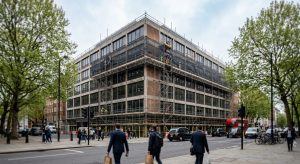
Office: better demand, still high vacancy
The office market is showing signs of stabilization, but it is not fully recovered.
CBRE reported that U.S. office net absorption totaled 6.9 million square feet in Q1 2026, the highest first-quarter total since 2020 and the eighth consecutive quarter of positive demand. Overall office vacancy fell to 18.6%, while prime vacancy dropped to 12.7%.
That is encouraging, but office remains a divided market. High-quality, well-located buildings with strong amenities can outperform. Older buildings with weaker locations, functional problems or heavy capital needs may still struggle.
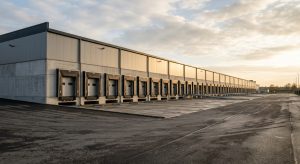
Industrial: leasing rebounds, vacancy normalizes
Industrial real estate is no longer as tight as it was during the pandemic logistics boom, but demand is improving.
CBRE reported that U.S. industrial leasing activity increased 14% year over year in Q1 2026 to 249.8 million square feet. Net absorption rebounded to 43.1 million square feet, while overall industrial vacancy and availability rose year over year to 6.7% and 9.2%.
This is a normalization story rather than a collapse story. Tenants are still leasing, but they are optimizing networks, watching costs and choosing space more carefully.
Retail: low supply keeps the market tight
Retail is one of the stronger commercial real estate sectors in 2026.
CBRE reported that average retail asking rent rose 2.4% year over year to $24.59 per square foot in Q1 2026. Retail availability rose slightly to 4.9%, but remained low by historical standards.
The retail story is driven by scarcity. Very little new retail space has been built in many markets, and desirable centers with strong tenant demand can remain tight even when consumer spending is uneven.
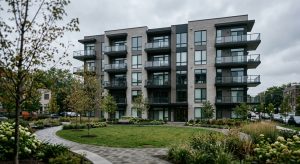
Multifamily: demand improves as completions slow
Multifamily is moving from oversupply pressure toward a more balanced market in some areas.
CBRE reported that U.S. multifamily vacancy fell by 20 basis points from Q4 2025 to 4.8% in Q1 2026. Net absorption totaled 78,100 units, and construction completions fell 30% year over year to 58,100 units. Average monthly rent rose 0.2% year over year to $2,217.
Debt maturities remain the risk to watch
Even where property fundamentals are improving, debt can still create stress.
MBA said commercial and multifamily mortgage debt outstanding crossed $5 trillion in Q1 2026. MBA also reported that 17%, or $875 billion, of the $5.0 trillion of outstanding commercial mortgages held by lenders and investors is scheduled to mature in 2026.
That matters because loans originated in a lower-rate environment may be refinancing into a different market. Higher interest rates, lower valuations, stricter underwriting or weaker property income can make refinancing harder.
What this means
For investors, 2026 is a selection market. Broad sector labels are not enough. The real questions are: What is the property quality? How strong is the tenant demand? What is the debt maturity? Can income support refinancing? Is the asset in the path of demand or facing obsolescence?
The 2026 commercial real estate outlook is not a universal recovery. It is a reset in which office, industrial, retail and multifamily each need to be analyzed separately.
FAQ
Is office real estate recovering in 2026?
Office is stabilizing, but recovery is uneven. Vacancy remains high and older buildings may continue to struggle.
Is industrial still the strongest CRE sector?
Industrial remains a strong long-term sector, but it is no longer as tight as it was during the pandemic logistics boom.
Why is retail holding up better than expected?
Retail is benefiting from limited new supply and low availability in many markets.
Is multifamily stabilizing?
Yes, nationally multifamily showed signs of stabilization in Q1 2026, with lower vacancy and positive absorption.
How large is the CRE refinancing wall in 2026?
MBA reported that 17%, or $875 billion, of $5.0 trillion in outstanding commercial mortgages is scheduled to mature in 2026.
Sources
- CBRE Q1 2026 U.S. Office Market Report
- CBRE Q1 2026 U.S. Industrial and Logistics Figures
- CBRE Q1 2026 U.S. Retail Figures
- CBRE Q1 2026 U.S. Multifamily Figures
- MBA Commercial and Multifamily Mortgage Debt Outstanding
- MBA Commercial/Multifamily Research