The 30-year mortgage crossed 7% this week, and almost everything else that happened in housing has to be read against that line.
Freddie Mac’s Primary Mortgage Market Survey put the 30-year fixed at 7.03% on Sept. 24, up from 6.95% the week before and well above the 6.30% of a year earlier. The 15-year averaged 6.42%, up from 6.26%. Earlier in the week the Mortgage Bankers Association’s applications survey had the 30-year contract rate at 7.12%, its highest since May 2024, with adjustable-rate loans taking 9.8% of applications — the clearest sign yet that borrowers are trading rate certainty for a lower payment.
Nobody at the Federal Reserve offered comfort. Governor Michael Barr said home affordability has fallen to a 21-year low and that further rate increases are likely. A week after the September FOMC meeting, the market’s assumption that housing gets rescued by the policy rate looks weaker than it did.
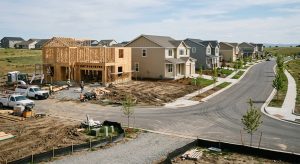
New-home sales rose — at a price
The week’s one genuinely strong number came Thursday, and it came with an asterisk. Census and HUD reported that new single-family sales ran at a seasonally adjusted annual rate of 684,000 in August, 6.4% above July’s 643,000 and the best month of 2026 so far — but still 2.0% below August 2025.
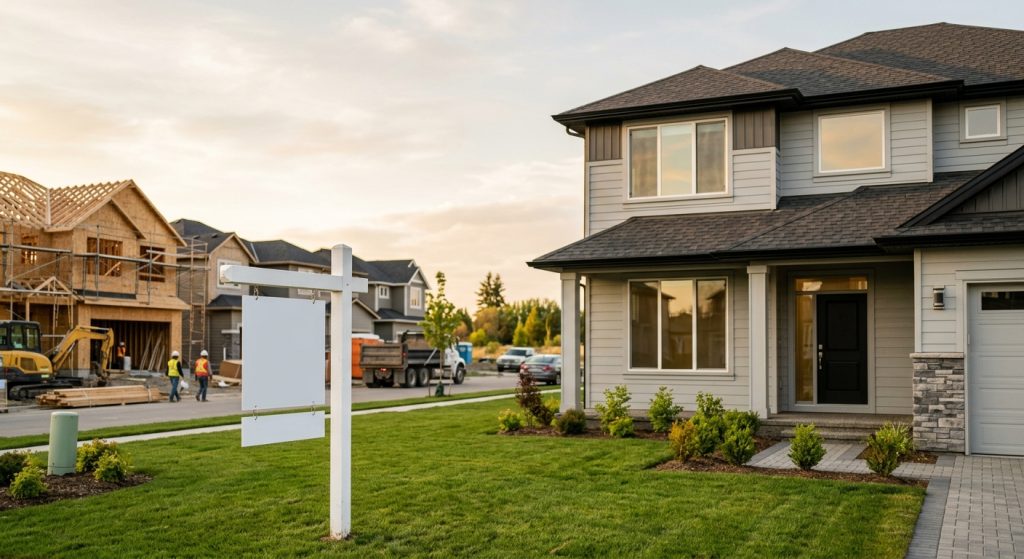
The price data explain how that was achieved. The average sale price of a new house fell to $478,700, down 9.1% from July and 8.8% from a year earlier. The median slipped to $393,700, 5.8% below last August. Inventory held at 483,000 homes, an 8.5-month supply. Builders are moving houses by cutting prices and buying down rates, and the volume response only shows up where the discount is real.
That is a workable strategy for a public builder with margin to give and a difficult one for everyone else. It also sets the terms for the resale market: a listing agent competing against a new house with a 5% handle on the mortgage is not competing on square footage.
The pipeline is getting thinner
Supply-side news ran the other way. The National Multifamily Housing Council’s quarterly survey found 29% of apartment developers started fewer projects in the third quarter, with costs still rising. Fewer starts now means fewer deliveries in 2028 and 2029, which is the medium-term argument for rents — and the reason rate relief, whenever it comes, may arrive into a tighter market rather than a looser one.
In retail, Starbucks said it would close 250 North American coffeehouses as part of a $300 million restructuring, a reminder that even well-capitalized national tenants are pruning footprints rather than expanding them.
Capital keeps choosing the same asset class
Where money is moving, it is still moving toward compute. Cipher Digital said Friday it had doubled the contracted term at its Barber Lake campus in Colorado City, Texas, to 20 years, lifting contracted revenue there past $9 billion, with a second tenant committed a decade before the first one leaves. The same week showed the other face of that trade: Oracle’s force majeure notice on Project Jupiter put a marker on how much of the AI buildout depends on power arriving on schedule.
Sentiment across the rest of commercial real estate is less buoyant. Deloitte’s 2027 outlook had sentiment falling to 57.8 even as revenue expectations held near a record — optimism about one’s own numbers, pessimism about the environment.
Affordability became a political program
Two announcements late in the week treated the housing squeeze as something to be organized around. The U.S. Conference of Mayors published a survey in which 96% of 113 mayors named housing costs as the driver of the affordability crisis, and launched a four-city October tour to press for federal help — a familiar ask, given that an earlier accounting found Washington spent $460 billion on housing affordability since 2015 without visibly narrowing the gap. Google.org, separately, funded three veterans’ organizations to move 25,000 people into construction trades, a supply-side intervention aimed at the labor shortage the industry puts above 700,000 workers a year. It lands alongside the industry’s own “Let America Build” supply campaign launched this month.
The week’s shape, then: financing costs at a two-year high, demand that responds only to discounts, a development pipeline contracting, and capital concentrating in one sector. Next week brings the first independent read on prices since rates moved, with July home-price indexes due Tuesday.