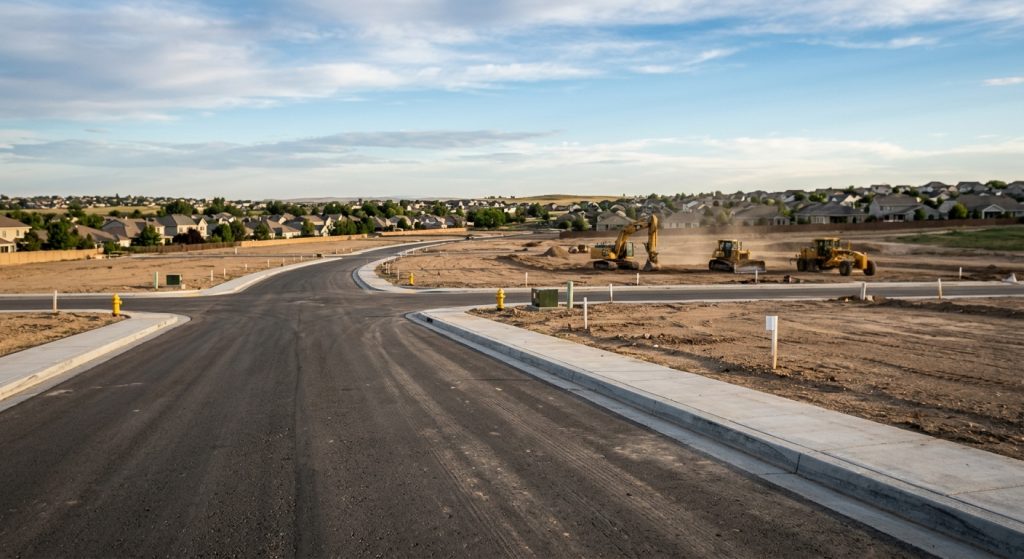
Starwood Capital Group is putting institutional money behind an early link in the homebuilding chain: loans that pay for raw land and the roads, utilities and graded lots that come before a single house goes up. The private investment firm and Vancouver-based lender Trez Capital announced on Nov. 3, 2026 a strategic partnership to originate residential land acquisition and development loans for single-family communities across the United States.
According to the companies, the partnership is expected to be seeded with a US$450 million portfolio of land acquisition and development loans already originated by Trez Capital, and it will target more than US$1 billion in annual originations. Financial terms between the two firms, including how much capital Starwood is committing, were not disclosed.
How the residential land financing partnership works
The division of labor is laid out plainly in the announcement. Starwood brings what the release calls “institutional capital and investment platform.” Trez Capital, which has offices in Canada and the U.S., brings the lending machinery: origination, underwriting, loan servicing and asset management.
For Trez, the deal expands lending capacity for a residential land development financing platform it already runs. For Starwood, the companies said, it is a way to finance land acquisition and development “complementing its long-standing track record in residential land investments.” The two firms said they believe they will be positioned to benefit from “structural housing supply imbalances and continued residential demand across the U.S.,” particularly in markets with sustained population growth, employment diversity and investment opportunity.
“Trez Capital has a strong track record in U.S. residential land lending, and we look forward to leveraging our collective strengths through this relationship,” said Anthony Murphy, managing director at Starwood Capital. He added that combining Starwood’s capital and its “master-planned community development” experience with Trez’s land financing capabilities would position the venture “as a premier lending platform.”
John D. Hutchinson, co-chief executive officer and global head of origination at Trez Capital, called the partnership “a significant endorsement of Trez Capital’s financing expertise” and said it “will enable us to scale our U.S. residential land development lending business significantly.” His fellow co-CEO and chief financial officer, John Maragliano, described it as “an important step in Trez Capital’s strategy to expand our institutional relationships,” one he said would support “stronger returns and liquidity for our investors.”
Two firms that have done business before
The partners are not strangers. In April 2025, Trez Capital announced the sale of a portfolio of 11 master-planned community projects in the Dallas, Houston and Austin areas to Starwood Capital Group and its affiliates. The projects had been developed by Hines, nine of them in a joint venture with Trez. Terms of that sale were not disclosed.
The scale on each side is lopsided. Starwood says it has raised more than $95 billion since its founding in 1991 and manages more than $130 billion of assets; in June 2026 it held the final close of its latest opportunistic real estate fund, Starwood Distressed Opportunity Fund XIII, with more than $10.2 billion of commitments. Trez, founded in 1997, reports more than C$4.7 billion of assets under management across its related entities as of the second quarter of 2026 and says it has funded more than 1,800 transactions totaling over C$23 billion.
Why land loans are drawing private capital
Land acquisition and development lending has historically been a bank business, and banks have been pulling back from it. In the Federal Reserve’s October 2026 Senior Loan Officer Opinion Survey, released Nov. 2, domestic banks reported having tightened standards, on net, for all categories of commercial real estate loans, including those secured by construction and land development, during the third quarter. Builders have felt that squeeze for a while; RealtyWire has reported on rising credit costs for builders since the end of 2025.
Private capital has been moving into the gap. Starwood and Trez are the latest in a string of non-bank vehicles built to finance lots for builders. On Nov. 2, Wafra and Hunt launched Strata Land Partners to bankroll homebuilders’ lots, and land-banking specialist Millrose Properties reported $9.7 billion in homesites as of its second-quarter results. The structures differ: land-banking platforms such as Millrose typically hold land and release finished lots to builders over time, while the Starwood-Trez platform is a lender, putting debt behind developers who own the land.
On our reading, the more notable figure in the announcement is the US$1 billion annual origination target, more than double the US$450 million starter book. Hitting it would require a steady supply of developers willing to borrow for new subdivisions at a time when the release itself frames the opportunity around supply shortages rather than current sales strength. Whether that target is met will show up in the pace of new lot deliveries in the growth markets the firms say they are aiming for; the companies have not named specific metros.
More coverage of builders and land is on RealtyWire’s housing market page.