
Current real estate market data, news and analysis for the Myrtle Beach-Conway-North Myrtle Beach, SC metropolitan area — 427,551 residents across Horry county.
Data as of May 2026. Sources: Redfin Data Center, U.S. Census Bureau.
Latest Myrtle Beach Real Estate News
Myrtle Beach Real Estate Market Overview
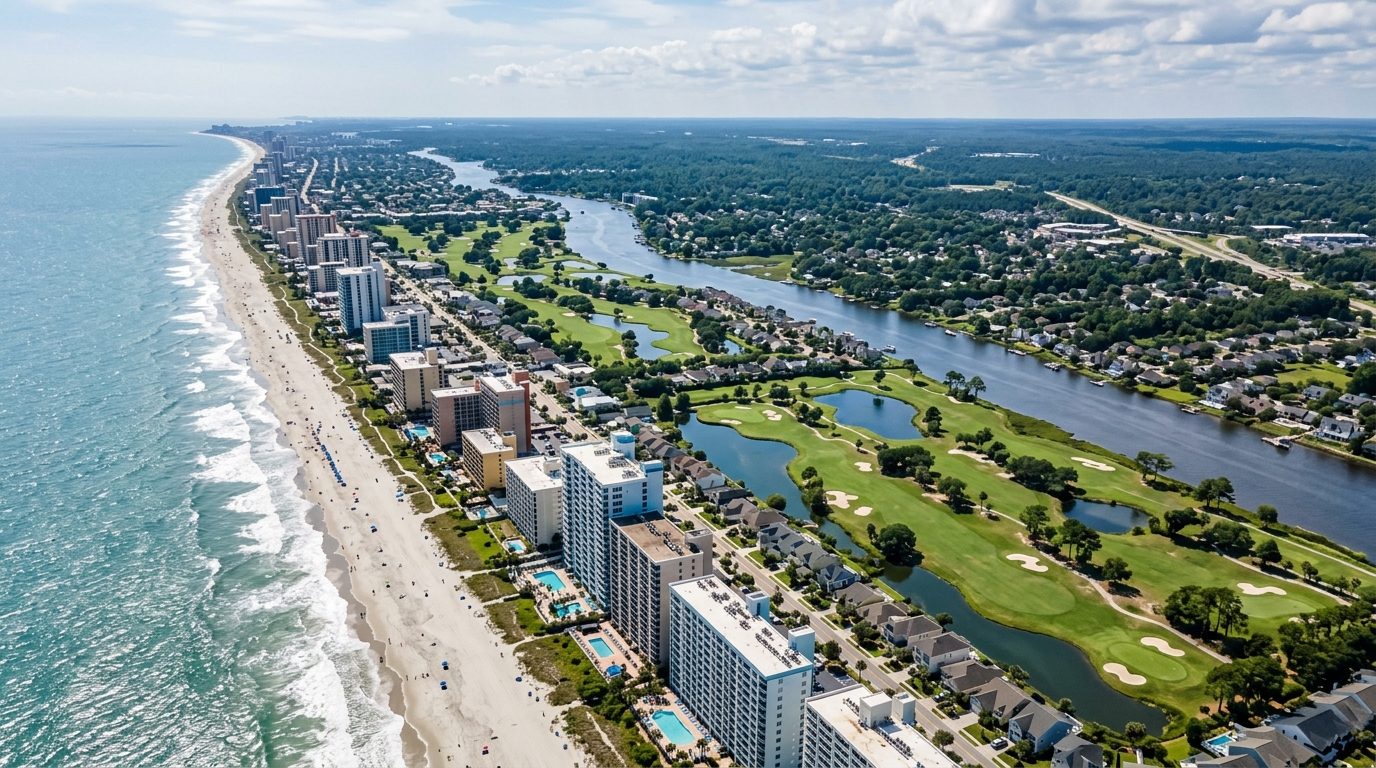
The Myrtle Beach-Conway-North Myrtle Beach metro occupies Horry County in the northeastern corner of South Carolina’s coastal plain, stretching from the Atlantic shoreline known as the Grand Strand inland across flat, low-lying terrain drained by the Waccamaw and Little Pee Dee rivers toward the county seat of Conway. The coastline is a nearly continuous run of beach towns—Myrtle Beach, North Myrtle Beach, Surfside Beach, and the historically Black beach community of Atlantic Beach—while the Intracoastal Waterway threads just inland of the dunes, shaping golf-course and marina development. Housing stock ranges widely: high-rise oceanfront condominium towers and resort-style villas along the beach, single-family homes and townhomes in sprawling golf and lake communities further inland, and older, lower-density farmhouses and ranch homes around Conway, Aynor, and Loris, where the county remains agricultural and forested.
Within this footprint, oceanfront and direct Intracoastal Waterway addresses in Myrtle Beach and North Myrtle Beach sit at the top of the market, commanding a premium for water views, beach access, and rental income potential. Gated, amenity-rich golf communities such as those built around Grande Dunes and Barefoot Resort occupy a comparable upper tier, reflecting golf-course frontage, private clubhouses, and marina access. Moving inland toward Carolina Forest, the middle of the market centers on newer suburban subdivisions built around schools and everyday retail. The most affordable tier lies farthest from the coast, in and around Conway, Aynor, and Loris, where larger lots and older housing stock trade at a discount to beachfront and resort-adjacent property.
Tourism and hospitality anchor the local economy, supported by the metro’s beaches, golf courses, and entertainment corridor, and the sector drives substantial seasonal and service employment. Beyond tourism, the largest employers include Horry County Schools, Horry County government, Coastal Carolina University in Conway, and the region’s hospital systems—Conway Medical Center and Grand Strand Medical Center, part of HCA Healthcare, along with McLeod Loris Seacoast to the north. Retail chains such as Walmart and Food Lion are major employers, as is the City of Myrtle Beach and Horry Telephone Cooperative. Manufacturing has a smaller but notable presence, led by Kyocera AVX’s electronics operations, along with Apollo Valves/Conbraco and Canfor Southern Pine’s wood-products operations, reflecting the county’s timber and forestry base.
Coastal geography brings hurricane exposure and flood risk that vary block by block; FEMA flood zone designations differ between oceanfront, Intracoastal, and inland parcels, and wind and hail coverage in much of the coastal area runs through South Carolina’s Wind and Hail Underwriting Association when standard carriers won’t write it, so buyers should confirm flood zone status and insurance availability before writing an offer. South Carolina taxes owner-occupied primary residences differently than second homes and rental property, which materially affects carrying costs for the area’s many vacation and investment purchases. Golf-course and waterway communities typically carry homeowners association dues and use restrictions, and short-term rental rules vary by jurisdiction along the Grand Strand, so buyers should verify HOA covenants, rental permitting, and municipal zoning locally rather than assume uniform rules apply metro-wide. Public transit is limited, and most residents rely on personal vehicles.
Cities and Towns in the Myrtle Beach Metro Area
Notable Communities and Neighborhoods
Myrtle Beach Real Estate Market FAQ
How is the Myrtle Beach-area housing market organized geographically?
The market runs in bands moving inland from the ocean: oceanfront and Intracoastal Waterway addresses in Myrtle Beach and North Myrtle Beach, then gated golf and marina communities built around the waterway, then suburban subdivisions in areas like Carolina Forest, and finally more rural, lower-density housing around Conway, Aynor, and Loris. Each band has a distinct housing character, from high-rise condominium towers at the coast to farmhouses and larger-lot homes inland.
Which areas of the metro tend to be pricier, and why?
Oceanfront and direct waterway property commands the highest prices because of beach access, views, and rental appeal, while established golf and marina communities near the coast carry a similar premium for amenities and course frontage. Prices generally ease moving inland toward Conway and the county’s smaller towns, where lots are larger, homes are older, and proximity to the beach and tourist corridor is reduced.
What should buyers verify locally before purchasing in this metro?
Buyers should confirm a property’s FEMA flood zone designation, whether wind and hail coverage is available through the standard market or requires the state’s residual wind pool, and how South Carolina’s property tax classification for primary residences versus second homes or rentals will affect carrying costs. In golf, waterway, and other planned communities, buyers should also review HOA covenants, dues, and any short-term rental restrictions, since rules vary by community and by municipality along the Grand Strand.
What flood and storm risk factors are specific to this coastal metro?
As an Atlantic coastal county, Horry County is exposed to hurricanes, tropical storms, and associated flooding, with risk levels that differ significantly by location—oceanfront and low-lying waterway parcels generally carry higher-hazard flood zone designations than inland property. Because standard insurers do not always write wind and hail coverage in the coastal area, some buyers rely on South Carolina’s Wind and Hail Underwriting Association, making it important to confirm insurability and likely coverage costs during due diligence rather than after closing.
Nearby Markets