
Current real estate market data, news and analysis for the Lewiston-Auburn, ME metropolitan area — 116,487 residents across Androscoggin county.
Data as of May 2026. Sources: Redfin Data Center, U.S. Census Bureau.
Latest Lewiston Real Estate News
Coverage of this market is coming soon. Browse all housing market news.
Lewiston Real Estate Market Overview
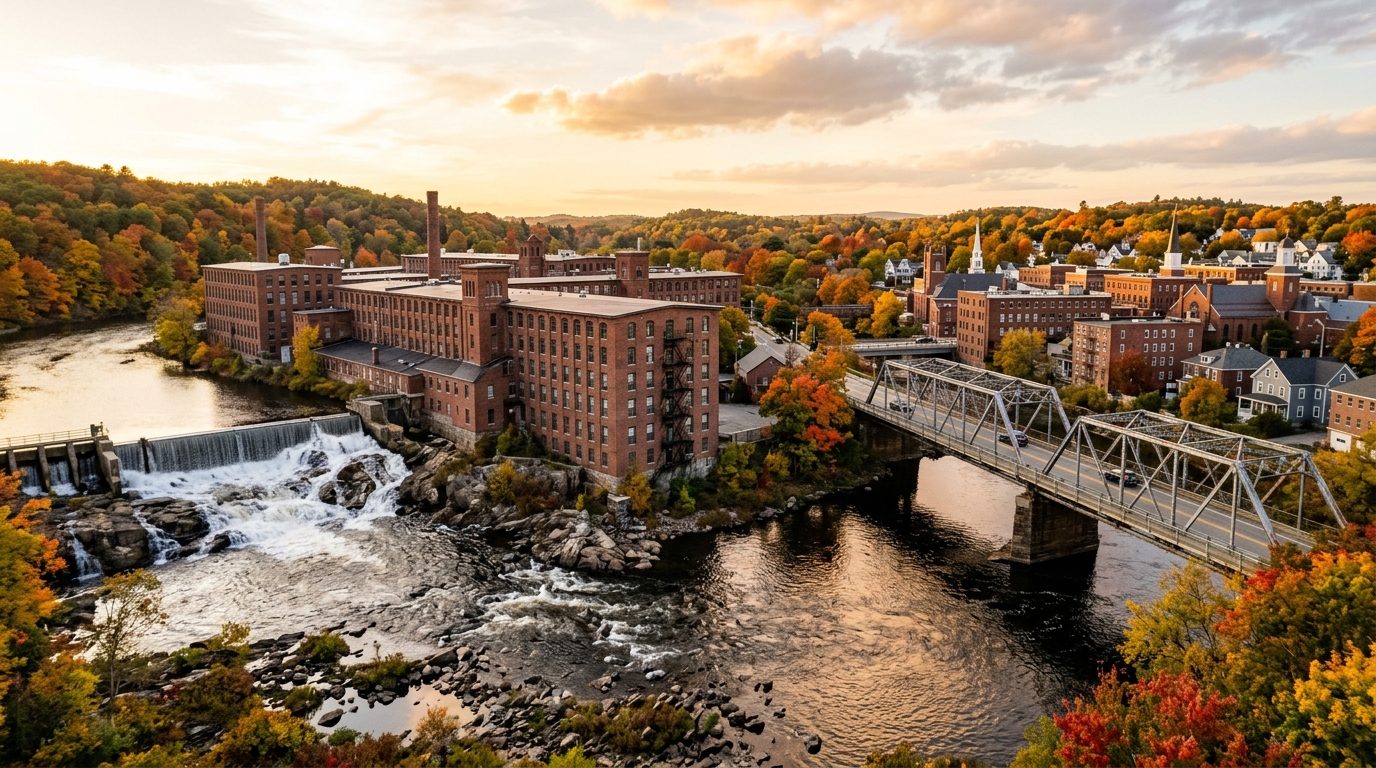
Lewiston and Auburn form a twin-city metro split by the Androscoggin River in south-central Maine’s Androscoggin County, with the river’s falls marking the traditional line between the two downtowns, now linked by several bridges. Lewiston’s core retains a dense grid of brick mill buildings, canal remnants, and worker-era multifamily housing built for the textile and shoe industries that founded the city, giving its downtown and near-downtown streets a compact, urban character unusual for interior Maine. Auburn’s riverfront carries a similar but smaller-scale mill heritage, with historic commercial blocks facing Lewiston across the water. Outside the twin-city core, the metro widens into the surrounding towns of Durham, Greene, Leeds, Lisbon, Livermore, Livermore Falls, Mechanic Falls, Minot, Poland, Sabattus, Turner, and Wales, where the landscape opens into farmland, forest, and lakes dotted with small village centers, and housing shifts from attached mill-town blocks to freestanding farmhouses, ranch homes, and camp-style cottages near water.
Price tiers across the metro generally track distance from the old mill core and proximity to water or open land. Auburn’s newer residential subdivisions and its areas near Lake Auburn tend toward the upper end of the local market, reflecting larger lots, newer construction, and lake or rural views. Lewiston’s downtown, the adjacent Tree Streets neighborhood, and the historically French-Canadian Little Canada district hold the metro’s densest and most affordable housing, built to shelter mill and factory workers within walking distance of the riverside plants. Moving outward, the surrounding towns split further along the same lines: lakefront and riverfront parcels in places like Poland and Turner draw a premium, while inland farming communities such as Wales, Leeds, and Livermore stay comparatively modest and rural in character.
The metro’s economy still carries visible industrial roots alongside newer institutional anchors. Central Maine Healthcare, whose flagship Central Maine Medical Center sits in Lewiston, is among the region’s largest employers, drawing healthcare workers from across the county and beyond. Bates College, a residential liberal arts college founded in Lewiston in the mid-nineteenth century, anchors the city’s east side with steady faculty and staff employment and a recurring seasonal population of students and visitors. Manufacturing never fully left: the old Bates Mill complex now houses offices and small businesses, while Lewiston-based promotional products company Geiger and regional food producer Lepage Bakeries continue to employ production and logistics workers, alongside auto-parts and industrial manufacturers carrying forward the area’s factory-town identity. Auburn, as county seat, adds public-sector employment to the mix.
Several local factors shape how buyers approach this market. Much of the housing stock in the Lewiston and Auburn urban core predates modern lead-paint regulations, so older multifamily and single-family properties there often warrant a lead inspection and a renovation budget alongside the purchase price. Winters are cold and snowy, and heating systems, insulation quality, and snow-removal costs are practical considerations when evaluating an older New England home. Property tax rates and municipal services vary town by town, since Lewiston, Auburn, and each surrounding town sets its own budget and mill rate, worth comparing before settling on a location. The metro also carries a distinct social layering, with a longstanding Franco-American mill-town heritage in the urban core, a growing New American immigrant community centered in Lewiston, and quieter rural surroundings, all within a short drive of the shared riverfront tying the twin cities together.
Cities and Towns in the Lewiston Metro Area
Notable Communities and Neighborhoods
Lewiston Real Estate Market FAQ
What makes the Lewiston-Auburn housing market different from other Maine metros?
Its core is defined by a historic twin-city mill-town layout rather than a coastal or suburban pattern, with dense brick multifamily buildings near the Androscoggin River giving way quickly to rural farm towns just a short drive out, producing a wider range of housing types within a compact metro than many comparable Maine areas.
Should buyers worry about lead paint in older Lewiston-Auburn homes?
Much of the housing stock in the urban cores of Lewiston and Auburn predates modern lead-paint standards, so a lead inspection is a reasonable step for older multifamily or single-family properties, and buyers should budget for potential remediation as part of any renovation plan.
How does winter weather affect owning a home in this area?
Winters bring sustained cold and regular snowfall, so heating system condition, insulation quality, and a plan for snow removal are practical factors to weigh when evaluating any home, particularly older construction in the historic mill-town neighborhoods.
Do property taxes differ much between Lewiston, Auburn, and the surrounding towns?
Yes, each municipality in the metro, from Lewiston and Auburn to the smaller surrounding towns, sets its own local budget and tax rate independently, so comparing carrying costs across town lines is worthwhile before choosing where to buy.
Nearby Markets