
Current real estate market data, news and analysis for the Gettysburg, PA metropolitan area — 107,594 residents across Adams county.
Data as of May 2026. Sources: Redfin Data Center, U.S. Census Bureau.
Latest Gettysburg Real Estate News
Coverage of this market is coming soon. Browse all housing market news.
Gettysburg Real Estate Market Overview
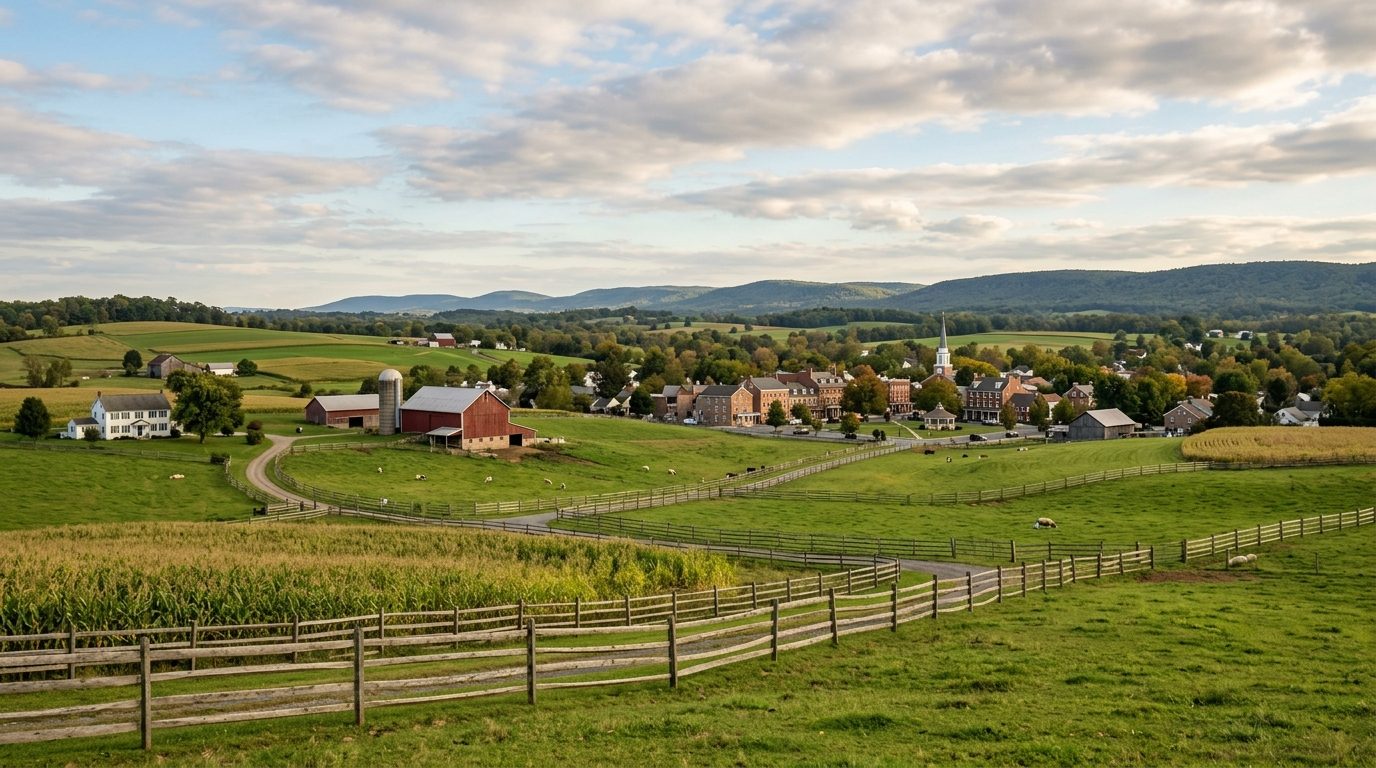
Gettysburg sits in south-central Pennsylvania’s Piedmont foothills, a landscape of gently rolling farmland and low ridges rather than steep mountains, with the South Mountain range forming the county’s western edge. Marsh Creek and Rock Creek run through and around the historic battlefield before joining to form the Monocacy River. Gettysburg Borough’s compact, historic core — much of it directly adjacent to or interwoven with Gettysburg National Military Park — contrasts with the surrounding county’s rural character, especially the orchard-covered "fruit belt" around Biglerville and Arendtsville, while Carroll Valley, in the county’s southwest corner, developed as a more modern resort community around a ski area.
In-town Gettysburg, especially properties near the historic district and battlefield, along with Carroll Valley’s resort-oriented housing near the ski slopes, tend to carry the highest prices in the metro, driven by historic character, walkability, and recreational amenities. Land directly abutting the battlefield is heavily constrained by conservation easements held by groups like the American Battlefield Trust, which limits new development there and can support values on the private land that remains. The smaller outlying boroughs — Littlestown, New Oxford, East Berlin, Abbottstown, McSherrystown, Bonneauville — and the rural orchard-belt towns of Biglerville, Arendtsville, and York Springs generally offer more modest, small-town or working-farm housing away from the battlefield tourism premium.
Manufacturing, particularly food processing tied to the county’s fruit industry, is actually the leading employment sector countywide; Knouse Foods Cooperative, whose brands include Musselman’s and Lucky Leaf, is one of the area’s largest named employers. Gettysburg National Military Park and the adjacent Eisenhower National Historic Site draw large annual visitation that supports lodging, dining, and retail concentrated around Steinwehr Avenue near the park entrance. Gettysburg College and the historic Lutheran Theological Seminary anchor higher education locally, and WellSpan Gettysburg Hospital and Adams County government round out the area’s major employers.
Gettysburg Borough regulates a historic overlay district under Pennsylvania’s Historic District Act, meaning exterior changes to structures within the protected area require approval — an important detail for anyone buying in or near the historic core. Marsh Creek and Rock Creek both have mapped flood hazard areas that run through parts of the battlefield and borough, so buyers there should confirm flood-zone status. Pennsylvania’s local earned income tax is layered on top of state and federal income tax and varies by municipality and school district, and property tax bills here are split across county, school district, and municipal levies, with the school portion typically the largest. The county has no meaningful fixed-route transit system, and local business cycles are shaped by tourism seasonality tied to the battlefield anniversary in July and the fall apple-harvest season around Biglerville.
Cities and Towns in the Gettysburg Metro Area
Notable Communities and Neighborhoods
Gettysburg Real Estate Market FAQ
How is the Gettysburg housing market organized?
The market centers on Gettysburg Borough’s historic core near the battlefield, the resort community of Carroll Valley, smaller outlying boroughs like Littlestown and New Oxford, and the rural orchard-belt towns in the county’s fruit-growing region.
Which parts of the metro tend to be pricier?
In-town Gettysburg near the historic district and battlefield, along with Carroll Valley’s resort-oriented housing, tend to carry the highest prices, while the smaller outlying boroughs and rural orchard towns are generally more affordable.
What should buyers verify before purchasing here?
Buyers in or near Gettysburg’s historic overlay district should confirm what exterior changes require approval under the borough’s zoning code, and properties near Marsh Creek or Rock Creek should be checked against current flood maps.
What is the main regional risk factor to know about?
Flooding along Marsh Creek and Rock Creek, both of which run through parts of the battlefield and borough, is the metro’s most consistent local risk factor to check on a parcel-by-parcel basis.
Nearby Markets