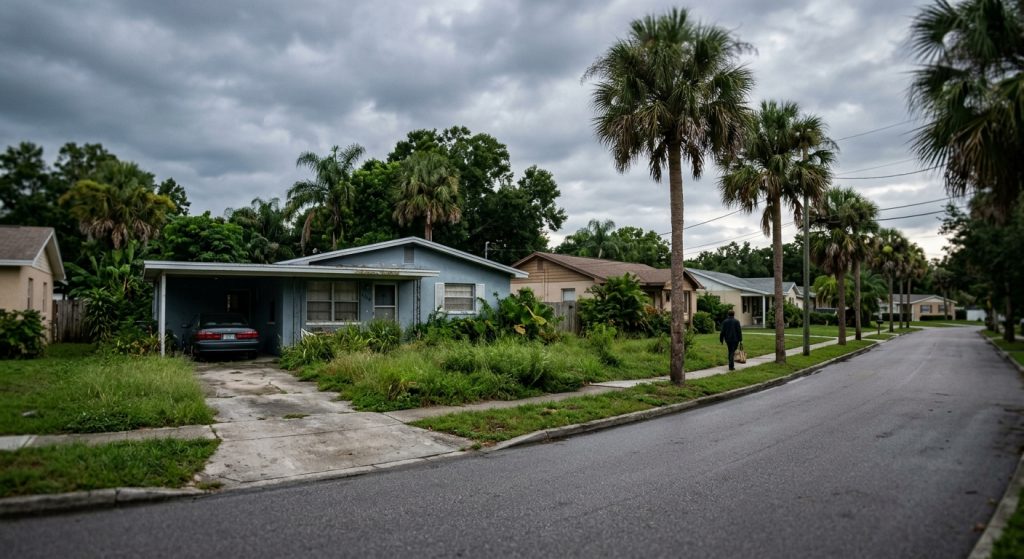
Florida posted the nation’s highest foreclosure rate in the first half of 2026, with one in every 373 homes receiving a foreclosure filing, according to a mid-year report from ATTOM. Nationally, foreclosure filings climbed 21% from a year earlier as the housing market continues a gradual return toward pre-pandemic patterns.
ATTOM, a curator of U.S. property and real estate data, reported that 227,548 U.S. properties had a foreclosure filing — default notice, scheduled auction or bank repossession — in the first six months of 2026. That total is up 21% from the first half of 2025 and up 28% from the first half of 2024, according to the company’s mid-year foreclosure market report, published July 15.
Florida leads the nation in foreclosure filings
Florida recorded 27,494 properties with foreclosure filings in the first half of 2026, equal to about 0.27% of the state’s housing units, the highest rate of any state, ATTOM found. That marked an increase of roughly 33% from a year earlier and about 37% from two years earlier. South Carolina (0.26%), Indiana (0.25%), Delaware (0.25%) and Illinois (0.23%) rounded out the five states with the worst foreclosure rates.
The largest year-over-year percentage increases in foreclosure filings came in Idaho (up 59%), Colorado (up 57%), Georgia (up 52%), North Carolina (up 47%) and Mississippi (up 45%), according to the report.
Nationally, foreclosure starts — the initial step in the foreclosure process — totaled 164,566 in the first half of the year, up 18% from a year earlier. Bank repossessions, known as REOs, totaled 27,983, up 33% year over year but still down 26% from the first half of 2020, before pandemic-era foreclosure moratoriums took effect.
Foreclosures are moving faster through the pipeline
Properties that completed the foreclosure process in the second quarter of 2026 spent an average of 563 days in foreclosure, the shortest timeline since 2013, ATTOM said. That was down 2% from the first quarter of 2026 and 13% below the second quarter of 2025. Louisiana had the longest average foreclosure timeline in the country at 3,491 days, while Texas had the shortest at 155 days.
“Foreclosure activity continued to increase in the first half of 2026, but the broader picture remains one of a market that is gradually returning to more typical patterns,” said Rob Barber, CEO of ATTOM, in the report. Barber’s characterization reflects his company’s own interpretation of the data it compiled.
The mid-year increase follows a broader pattern flagged in RealtyWire’s earlier look at where foreclosure distress was building fastest in 2026, and comes as elevated mortgage rates have squeezed household budgets throughout the year. Florida’s exposure to rising property insurance costs and a soft condo resale market have also been cited by state regulators and industry groups as pressures on homeowners, though ATTOM’s report does not attribute the state’s foreclosure rate to any single cause.
Read more about housing market trends on RealtyWire.
What it means
Verified facts: the national and state-level filing totals, year-over-year and multi-year percentage changes, and the average foreclosure timeline figures come directly from ATTOM’s mid-year 2026 foreclosure market report.
Attributed interpretation: ATTOM’s characterization of the market “returning to more typical patterns” is the company’s own read on data it sells and markets commercially.
RealtyWire analysis: even with double-digit percentage increases, foreclosure rates nationally and in Florida remain far below the rates seen during the 2008-2012 foreclosure crisis, when national filing rates ran several multiples higher than today’s levels.