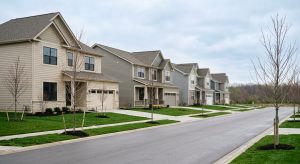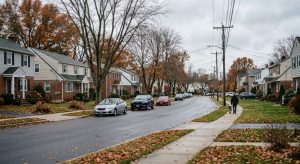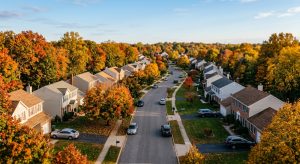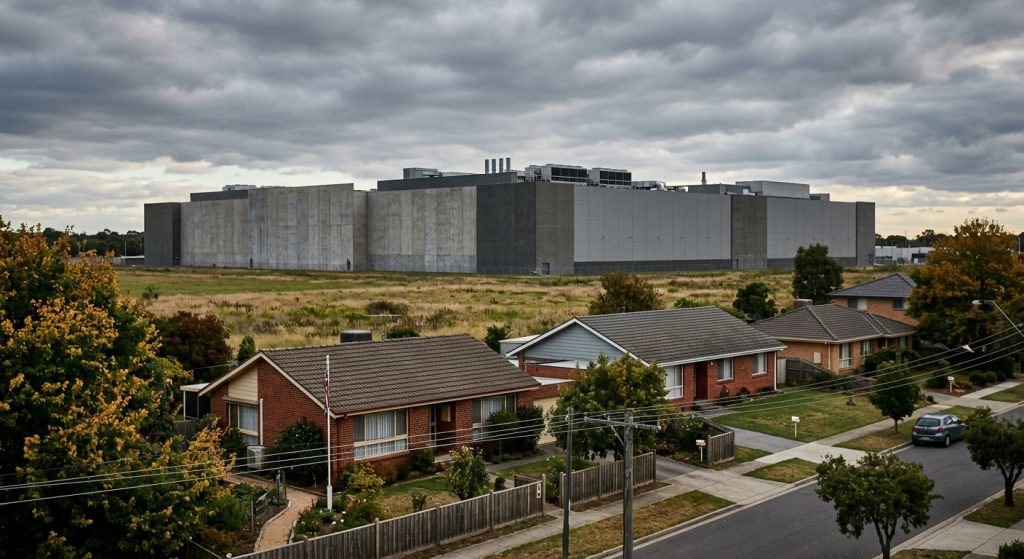
Data centers have moved from remote server farms to next-door neighbors for a growing share of American homebuyers, according to new research from Realtor.com published August 11. The number of large data centers has grown sevenfold since 2018, and the share of U.S. home sales happening near one has doubled to 1.5% of all transactions — yet Realtor.com’s own economic research team found no statistically significant hit to nearby home prices so far.
The findings land as data centers have become what Realtor.com calls “the hot-button issue of 2026.” Several cities and states have paused data center developments or incentive programs amid public backlash over power consumption, noise, and pollution, and lawsuits are pitting neighbors against each other in communities where the facilities are planned.
A sevenfold buildout since 2018
Large data centers — those drawing more than 50 megawatts — now number over 350 across U.S. communities, according to Realtor.com’s analysis. In 2015, that class of facility operated in 21 states and drew a combined 9,600 megawatts. By last year, they were spread across 26 states drawing 43,000 megawatts, and Realtor.com counted at least 200 more large centers currently under construction. By the end of 2026, the company projects nearly 2% of all home sales will occur near a big data center — not because buying activity around them has picked up, but because there are simply more centers in more places.
Pulling housing data from real estate data provider Aterio, Realtor.com’s researchers tracked where new centers are landing and found the industry is pushing further from cities and into lower-density, lower-income areas. Data centers that opened in 2017 sat roughly 23 miles from the nearest city center, on average; those opening this year are about 27 miles out, and ones planned for next year are projected at 34 miles. The surrounding areas have thinned out accordingly — 2017-era sites had about 116 housing units per square mile nearby, compared with 32 homes per square mile for this year’s openings.
Income patterns are shifting too. The median household income in ZIP codes hosting new data centers was 25% above the national median as of 2023, Realtor.com found. This year that gap has closed to just below the national median, and the company’s analysis projects it will fall further next year.
What Realtor.com found on home prices
The core question — whether a data center next door drags down property values — remains hard to prove either way, per Realtor.com’s analysis. After comparing 43 ZIP codes, some with newly opened data centers and some without, the company’s economic research team concluded that home prices near data centers have moved in line with prices in areas without them.
Realtor.com flagged several limits to that finding. The tracking window only covers roughly two years after a center opens, a period when construction-related economic activity may still be propping up local demand; slower-building effects like electricity costs and noise could take longer to show up in prices. The dataset also only includes states that publicly disclose home sale prices — a group that excludes Texas, one of the country’s most active data center markets. Realtor.com’s researchers also cautioned that the newest wave of centers is considerably larger than earlier ones and increasingly sited in rural communities with little experience managing large-scale development, raising water-supply concerns that older data doesn’t capture.
On property taxes, Realtor.com found that the communities in its study already had lower residential property tax rates before a data center arrived. Rates eased slightly further after a center opened, then climbed back up later — a pattern the company said is difficult to explain from the data alone.
Industry and local reaction
In a statement to Realtor.com, the Data Center Coalition — a trade group representing major developers and users — said member companies operate within their authorized permits and follow local ordinances. “Data centers are committed to being responsible actors in the localities where they operate,” said Nicole Riley, the group’s director of Virginia government affairs, adding that the industry “works closely with the many local, state, regional, and federal bodies responsible for permitting and project approvals, environmental regulation, and oversight.” The coalition told Realtor.com the industry has generated 5.5 million jobs, $204 billion in taxes, and $1.7 trillion in gross domestic product.
The buildout is also squeezing residential construction labor, Brian Kassalen, an attorney who leads Baker Tilly’s construction practice, told Realtor.com. Data center projects demand electricians and skilled trades that overlap with homebuilding, pulling workers away from housing projects even though the two types of work aren’t identical. “Hyperscale projects are absorbing labor in an already short labor pool,” Kassalen said. “That could translate to higher labor costs and more expensive new builds” — a dynamic that echoes what homebuilders have separately said about data centers outbidding them for land.
Political pressure builds
Elected officials in the most affected states are responding ahead of the midterms. Virginia Gov. Abigail Spanberger has pushed to make data center developers responsible for their own infrastructure costs, a stance that follows Virginia’s recent order requiring data centers to pay for dedicated transmission infrastructure. In Texas — where large projects such as a $15 billion, Anthropic-linked data center financed by Morgan Stanley-led banks illustrate the scale of investment pouring into the state — Gov. Greg Abbott has called for a pause on new development so the state can audit projects already underway and press companies to offset their water and power use. Meta, OpenAI, and QTS have said they will comply. “We welcome Governor Abbott’s leadership and look forward to working with him to establish clear guardrails for the industry and help ensure all providers operate with a commitment to transparency, accountability and responsible growth,” QTS co-CEOs Tag Greason and David Robey said in a statement.
Meta CEO Mark Zuckerberg addressed the broader anxiety in a lengthy open letter, “The Future is for Everyone: The Path to a Positive AI Future,” comparing the data center buildout to earlier infrastructure waves like railroads and broadband that turned host communities into “centers of research, business, and industry, with population and economic growth that follow.” He said Meta aims to build “strong Community Compacts that build durable assets and reasons for the next generation to build and grow their lives there.”
What it means
The verified facts: data centers are multiplying rapidly, spreading into more rural and lower-income ZIP codes, and now sit near a small but fast-growing share of home sales. Realtor.com’s own analysis — the company’s interpretation of its data, not an independent or peer-reviewed study — found no statistically significant price effect in the two years after a center opens, but the company itself flags real gaps: a short tracking window, missing data from Texas, and a new generation of larger, more rural projects that its historical data doesn’t yet cover. Whether values hold up over five or ten years, or once water and electricity costs are fully priced in, is not something this data can answer yet.
What to watch
Texas’s planned audit and Virginia’s infrastructure-cost rules will test whether states can shift more of the buildout’s costs onto developers rather than ratepayers and homeowners. Realtor.com’s research team has signaled it will keep tracking the price question as more of the newer, larger, more rural data centers reach their two-year mark — the point at which any lag effects on home prices would first become visible in the data.