
Current real estate market data, news and analysis for the College Station-Bryan, TX metropolitan area — 287,476 residents across Brazos, Burleson and Robertson counties.
Data as of May 2026. Sources: Redfin Data Center, U.S. Census Bureau.
Latest College Station Real Estate News
Coverage of this market is coming soon. Browse all housing market news.
College Station Real Estate Market Overview
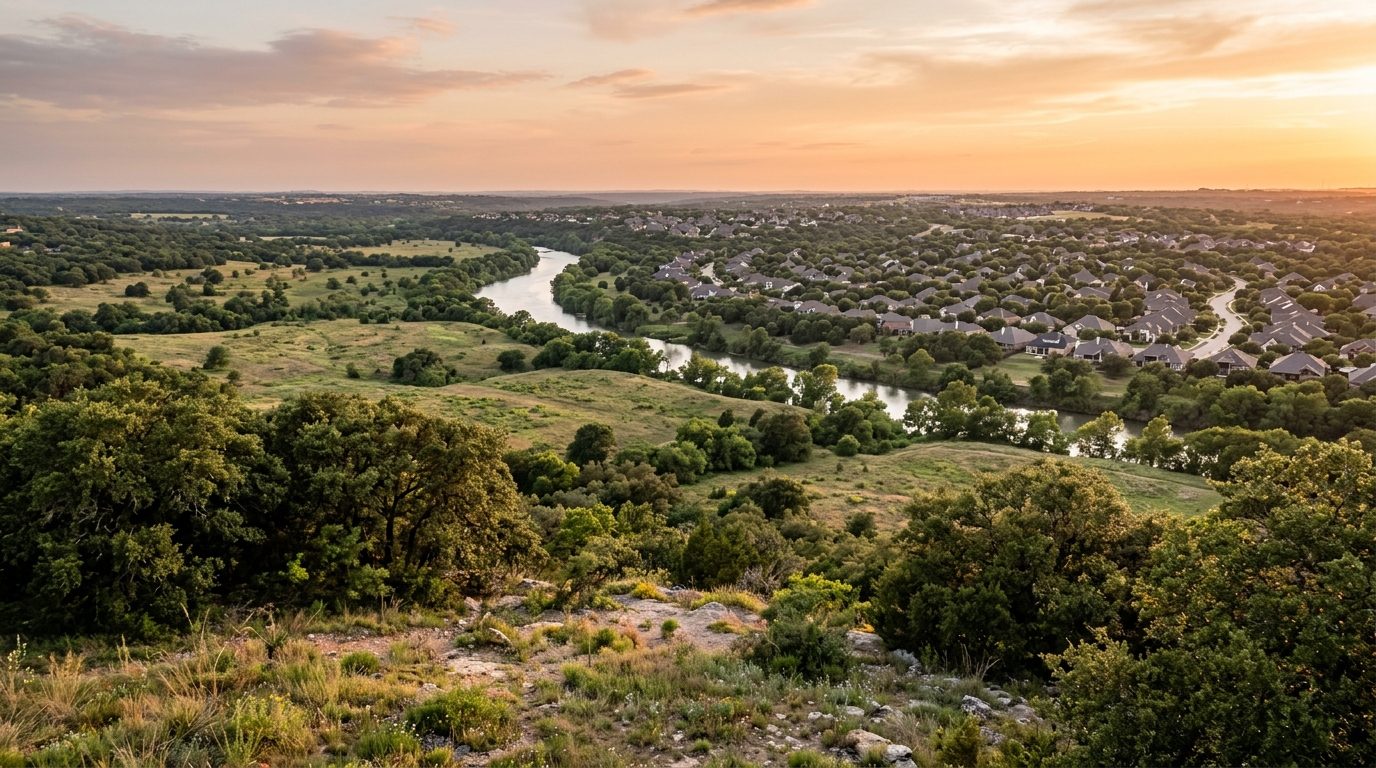
The College Station-Bryan metro sits in the Brazos Valley of east-central Texas, a landscape of rolling prairie and post oak woodland sloping gently toward the Brazos River, which runs along the western edge of the urban area. The terrain historically supported ranching and row-crop agriculture before subdivision development took hold. Housing stock reflects the area’s dual-city structure: Bryan, the older county seat, retains a core of early-to-mid twentieth century homes near its historic downtown, alongside postwar ranch-style houses and newer subdivisions on its outskirts. College Station, shaped almost entirely by the growth of Texas A&M University, is dominated by subdivisions built over recent decades, ranging from modest homes near campus to larger-lot houses in planned developments farther south and east. Multifamily and student-oriented housing make up a substantial share of the College Station stock, concentrated near campus and along major corridors.
Proximity to Texas A&M University is the strongest organizing factor in local housing geography. Neighborhoods within walking or short driving distance of campus, including areas near the Northgate district, carry a premium tied to convenience and steady rental demand from students, even where the homes themselves are older and smaller. Farther from campus, planned communities in south and southeast College Station and west Bryan, many built around golf courses, parks, or amenity centers, sit toward the higher end of the market based on lot size, newer construction, and amenities. More affordable housing tends to concentrate in older sections of Bryan, particularly near its historic downtown and in older postwar subdivisions. Rural areas in Burleson and Robertson counties, and unincorporated parts of Brazos County, generally offer larger acreage at lower density, appealing to buyers who prioritize land over proximity to campus.
The regional economy is anchored overwhelmingly by Texas A&M University, which employs a large share of the workforce directly and drives secondary employment in research, hospitality, and services tied to the student population. The Texas A&M University Health Science Center and affiliated research institutes add a biomedical research dimension. Healthcare is a major employment sector as well, led by Baylor Scott & White Medical Center-College Station and CHI St. Joseph Health in Bryan. Agribusiness and agricultural research, tied to A&M’s land-grant mission and extension programs, remain significant. The area has also developed a notable biotech and pharmaceutical manufacturing presence, most visibly through FUJIFILM Diosynth Biotechnologies’ large biomanufacturing campus in College Station.
The university’s academic calendar shapes rental and housing demand cycles in College Station, with leasing activity concentrated around fall and spring semester turnovers. Property taxes are set by overlapping local taxing entities, including cities, counties, and school districts, so tax burden varies by address. Parts of the metro, particularly areas near creeks and drainage ways and stretches closer to the Brazos River and Lake Bryan, carry flood risk that buyers should verify against current FEMA flood maps; both College Station and Bryan maintain floodplain management programs and participate in the National Flood Insurance Program. Continued growth around the university has driven ongoing annexation and new subdivision approvals on the urban fringe, so buyers should check current zoning, extraterritorial jurisdiction status, and whether a home falls within a homeowners association and its deed restrictions and dues.
Cities and Towns in the College Station Metro Area
Notable Communities and Neighborhoods
College Station Real Estate Market FAQ
How is the College Station-Bryan housing market organized geographically?
The metro is built around two adjacent cities, Bryan and College Station, in Brazos County, with Burleson County (seat: Caldwell) and Robertson County (seat: Franklin, largest city Hearne) forming the wider metro area. College Station grew up almost entirely around Texas A&M University, while Bryan is the older, historic county seat with its own separate downtown core. Housing patterns follow this split, with College Station oriented around campus and planned subdivisions, and Bryan built around a more traditional older street grid, with rural, lower-density areas in the surrounding counties.
Which areas of the metro tend to be pricier, and why?
Newer planned communities in south and southeast College Station and west Bryan, often built around golf courses, parks, or amenity centers, sit toward the higher end of the market due to larger lots, newer construction, and amenities. Areas close to Texas A&M’s campus also command a premium tied to walkability and steady rental demand from students and university staff, even where the housing stock itself is older. More affordable options tend to be concentrated in older sections of Bryan and in rural parts of Burleson and Robertson counties.
What should buyers verify before purchasing in this market?
Buyers should confirm current FEMA flood zone status for any specific property, since parts of the metro near creeks, drainage ways, and the Brazos River and Lake Bryan carry flood risk; check whether the property is inside city limits, in a city’s extraterritorial jurisdiction, or in an unincorporated county area, since this affects zoning and future annexation exposure; review the applicable combination of city, county, school district, and any special-district property tax rates for the exact address; and check for any homeowners association, its deed restrictions, and dues, which are common in the area’s newer planned communities.
What is a distinctive risk or factor specific to this region?
Flood risk tied to the Brazos River, Lake Bryan, and the area’s network of creeks and drainage channels is a region-specific factor; both College Station and Bryan maintain floodplain management programs and participate in the National Flood Insurance Program, and prospective buyers should check current FEMA flood maps and city or county floodplain records for any specific address rather than relying on a property’s flood status from a prior year, since flood map boundaries are periodically revised.
Nearby Markets