Of every dollar you can spend preparing a home for sale, none works harder than the few you spend on light bulbs. I have watched a dark, tunnel-like kitchen become the brightest room in the house — and a genuine selling feature — from nothing more than swapping old can-light bulbs for the right LEDs. Buyers equate bright with clean, spacious, and updated. Dim, yellow light reads as dated and dirty, no matter how nice the room actually is.
Here is exactly what to buy and where to put it.
The rule: daylight LEDs, 4500K and up
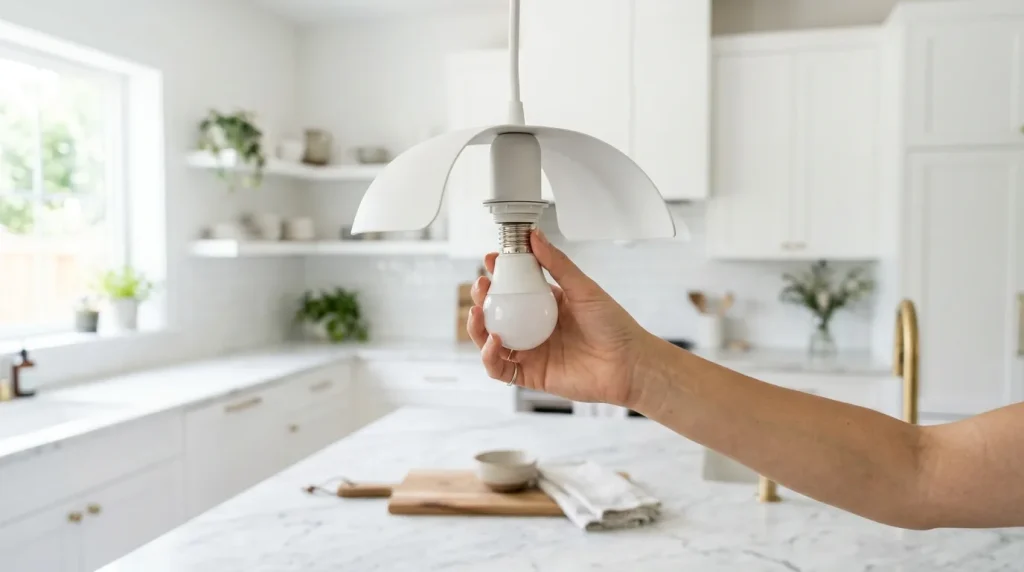
Light color is measured in Kelvin, and it is printed on every bulb package. Old incandescent bulbs sit around 2700K — the warm yellow glow that makes homes photograph like a 1990s listing. For selling, replace them with LED bulbs at a daylight color temperature above 4500K in kitchens, bathrooms, living areas, offices, and hallways. In my staging projects I routinely use 5500K to 6500K in kitchens and baths, and the transformation is immediate: whites look white, counters look clean, and rooms look bigger.
The one exception: bedrooms. Sleep spaces should feel calm and restful, and a warmer bulb — closer to 3000K — serves that mood better than clinical daylight.
Three rules that separate pros from amateurs
- Match every bulb in a fixture. A chandelier wearing three warm bulbs and two cool ones looks broken. Same color temperature, same brightness, every socket.
- Brightness matters as much as color. Brightness is measured in lumens — use high-lumen bulbs in dark rooms, and do not be shy about it. A dim corner disappears from a buyer’s mental floor plan.
- Replace every burned-out bulb in the house. A dead bulb is a tiny, cheap repair that whispers “deferred maintenance” to every buyer who flips the switch — the same signal sent by the small flaws sellers always underestimate.
Where lighting sells hardest
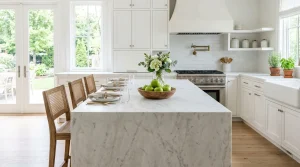
Kitchens. The most scrutinized room in the house should be the brightest. LED retrofit kits modernize old recessed cans without an electrician, and under-cabinet strips erase the shadows on your countertops.
Bathrooms. Buyers want bathrooms flooded with light — it is a major selling feature, and most bathrooms are underlit by half. If the fixture only holds one bulb, make it a bright one, or upgrade the fixture itself.
The photographs. Nearly every buyer meets your home online first, and staged, well-lit homes dominate in photos. Bright, color-consistent lighting is half of what makes listing photography pop.
Outside. Path lights, porch lights, and landscape lighting extend curb appeal into the evening — when many buyers do their drive-bys — and signal a cared-for home.
While you are at it, look at the fixtures
Lighting is the jewelry of a home. If the bulbs are right but the fixture screams 1988, a modern replacement in the dining room, entry, or over the kitchen island costs little and updates the entire room around it. LEDs also sip electricity and last for years — a small efficiency story some buyers genuinely care about.
An afternoon and a hundred dollars at the hardware store. Few investments in this business return more.
This article is adapted from my book, SELL SMART: The Proven Formula for Getting Top Dollar for Your Home, which covers lighting updates room by room.