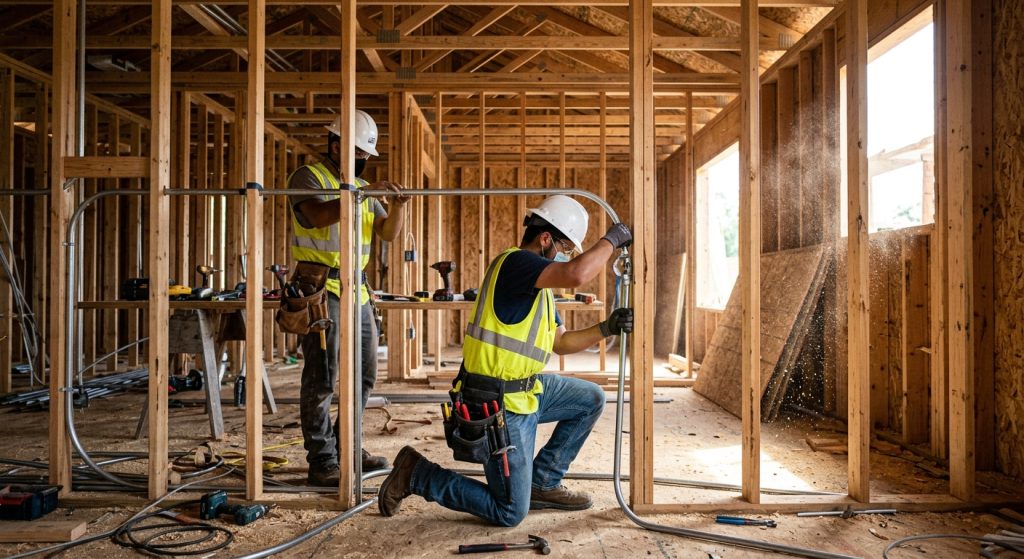
Google’s charitable arm is funding a push to move 25,000 veterans and military family members into the construction trades, aiming at a labor gap the industry puts at more than 700,000 workers a year.
Google.org announced the commitment on Sept. 24, saying it will direct funding and support to three organizations: Hiring Our Heroes, Student Veterans of America and the Home Builders Institute. Between them they will offer hands-on pre-apprenticeships, career coaching and direct job placement into roles the company lists as master electrician, lead pipefitter and project manager. Google said there are “hundreds of thousands of skilled trade roles open across the U.S. just waiting to be filled.” It did not disclose the size of the grants.
The post was written by Tim Chadwick, whose title at Google is data center operations area lead for Ohio and Indiana — a reminder that the company building AI campuses across the industrial Midwest is also now paying to enlarge the pool of electricians and pipefitters those campuses compete for.
What the Home Builders Institute will do with it
HBI, the nonprofit training arm affiliated with the home building industry, described its share of the money on Sept. 24 without putting a figure on it either. The grant will expand its military programs, which run tuition-free 12-week courses in carpentry and electrical work through the Defense Department’s SkillBridge program at 10 sites on or near military installations, among them Camp Pendleton, Fort Bragg and Fort Hood. Graduates earn industry-recognized credentials and placement help.
HBI says graduates of its military programs start at average wages above $23 an hour and that the programs place 87% of them. The organization puts the national cost of the skilled-labor shortage at roughly $10.8 billion a year and says the industry needs more than 700,000 additional workers annually.
Ed Brady, HBI’s president and chief executive, framed the appeal in terms of what leaving the service costs people. “Leaving the military means leaving behind more than a job. It means leaving a structure and an identity built over years of service,” he said. “Our service members already have the discipline, the leadership and the ability to get hard things done. A career in the trades puts all of that to work with real pay and a future they build with their own hands.”
Shanika Hope, a director at Google.org, said the shortage “will take sustained partnership, not one-off programs.” She added that the funder is “proud to support Home Builders Institute and other organizations as they expand training, credentials, and career pathways that keep this country building while supporting veterans and military families.”
Two industries bidding for the same crews
The arithmetic behind the announcement has grown harder over the past year rather than easier. Construction job openings jumped 36% in federal data this summer as data center work pulled tradespeople away from housing, and roughly one in six contractors now report data center projects in their backlog. Builders have complained about losing more than labor: some say data center developers are outbidding them for land at prices they cannot match.
A training pipeline of 25,000 people, spread across several years and several trades, is small against a stated annual need of 700,000. What it does offer is a supply of candidates already screened for the attributes contractors say they struggle to hire for, at an entry point — transition out of the military — where the timing is predictable and the federal government already pays for the retraining window.
Whether that pipeline ends up serving subdivisions or server halls is not something the grants determine. Both are hiring from it, and the trades that housing needs most — electrical, mechanical, plumbing — are the same ones data center construction consumes in the largest quantities.
This is not Google.org’s first move into the trades this year. In June it committed $50 million through its AI Opportunity Fund to expand skilled trades training in more than 20 states with a stated goal of preparing more than 300,000 workers, routing that money through union and contractor-association training bodies rather than veterans’ groups.